
Symphonic Metal
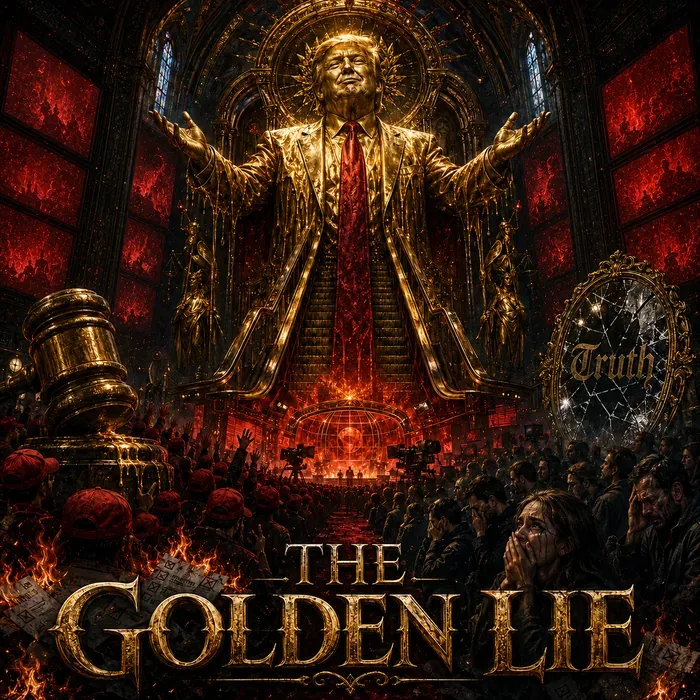
The Golden Lie
The Golden Lie is a fierce political metal opera about spectacle, propaganda, power and resistance—built for listeners who want albums with teeth and purpose.
Liner Notes
A short editorial read on the album world, sound, and standout moments.
About the Album
The Golden Lie does not begin with a battle. It begins with an entrance.
A gold escalator carries a television celebrity into a country already bruised by economic resentment, media exhaustion and political distrust. Cameras wait below. The crowd looks upward. What appears at first to be another piece of American spectacle soon reveals itself as the opening scene of something more dangerous: the conversion of fame into authority, grievance into loyalty and repetition into truth.
Built as a fourteen-track symphonic metal opera, The Golden Lie follows that transformation step by step. It does not treat authoritarianism as a sudden thunderclap arriving from nowhere. Instead, the album studies the machinery that makes it possible: ratings-driven newsrooms, frightened institutions, cynical donors, obedient party figures, algorithmic amplification and an audience trained to confuse entertainment with leadership. The result is not a protest record assembled from slogans. It is a narrative album about how democratic culture can be hollowed out while the studio lights remain bright and the crowd keeps applauding.
Musically, the record draws its weight from symphonic power metal, progressive metal and dark theatrical rock. Galloping guitars, controlled double-kick drums, brass, organ, piano and orchestral strings create the scale of a political pageant, but the arrangements rarely settle into simple triumph. A recurring descending motif follows the story like a warning signal, changing shape as the album moves from spectacle to ritual, from denial to collapse.
“The Escalator Descends” opens with mechanical grandeur, presenting the central figure not as a statesman but as a carefully lit product. “Crown of Static” turns the permanent news cycle into a weapon, while “The Man Who Sold the Mirror” asks why so many people were willing to purchase a flattering reflection of their anger. By the time “Fake News Cathedral” arrives, the television studio has become a place of worship, with accusation replacing evidence and airtime functioning as legitimacy.
Yet The Golden Lie is most effective when it refuses to reduce an entire country to heroes and villains. “Red Hats in the Rain” enters the mind of a rally participant carrying real economic pain, then shows how that pain is redirected toward convenient enemies. “Trial by Television” contrasts the slow work of legal procedure with the impatient demands of broadcast entertainment. “The Algorithm Kneels” gives the recommendation system its own voice—not as an evil intelligence, but as an indifferent machine trained by human attention. It does not invent the anger. It learns where the anger lives and keeps returning people to it.
The album reaches its central rupture with “Gold Paint on Rotten Wood,” a heavy, slow-moving track about institutions that cover structural decay instead of repairing it. Here, the golden imagery stops looking luxurious. It becomes a coating applied to weakness, corruption and fear.
From there, the story grows darker. “The Rally Becomes a Ritual” shows political belonging hardening into obedience. “Laugh Track for a Republic” uses cabaret unease and theatrical cruelty to portray democratic erosion as entertainment. “Every Lie Needs a Choir” broadens the accusation, reminding the listener that no demagogue builds power alone. Broadcasters, donors, lawmakers, religious opportunists and technology companies each supply a harmony until the lie sounds like consensus.
“The Felon and the Flag” then separates patriotism from personal loyalty. Its central argument is simple but forceful: a national symbol cannot absolve an individual, and no leader is entitled to wear the country as personal armor. The dramatic finale, “Liberty Under Studio Lights,” rejects the fantasy that one heroic figure can rescue democracy. Liberty is not presented as a statue waiting to be reclaimed, but as a difficult practice built from laws, journalism, elections, public records and the willingness to hear unwelcome facts.
The closing track, “Wake Before the Sirens,” offers hope without pretending the danger has vanished. A child finds a broken piece of the mirror marked “Truth,” and the image that once served vanity becomes an instrument of memory. The message is not that history has ended, or that one defeated movement can never return. It is that democratic life depends on habits maintained before the emergency arrives.
That is what makes The Golden Lie worth hearing as a complete album rather than a collection of isolated tracks. Its ideas develop, recur and change meaning. The gold escalator, cracked mirror, television cathedral and red caps are not decorations; they form a visual and musical language connecting the entire work. The record asks how a lie becomes a brand, how a brand becomes a movement and how a movement begins to demand submission.
Recommended if you like: Political punk, post-punk, protest rock, anti-authoritarian lyrics, dystopian concept albums, AI-assisted music projects. Even listeners who do not usually gravitate toward symphonic metal may find the storytelling unusually direct and the subject matter difficult to dismiss. The orchestration gives the album scale, but the writing keeps returning to concrete places and recognizable choices: the newsroom desk, the rally barrier, the courthouse file, the glowing screen and the person who decides whether to repeat what they know is false.
The Golden Lie is angry, but its anger has direction. It is theatrical without becoming escapist, political without collapsing into a lecture, and ambitious without losing sight of individual responsibility. It asks the listener to follow the entire chain—from entrance to idol, from idol to institution, from institution to resistance.
Press play at the top of the escalator. By the final note, the view below may look very different.
Production Notes
All tracks were generated with AI music models, then processed for the final orchestral sound. No human performance recordings are used.
Full album download
Download the complete album
Get the full ZIP package with tagged audio files, cover artwork, and album metadata.
Support MelodyMind
Help keep the albums coming
If this album was useful or fun to listen to, a small contribution helps cover hosting, tools, and new music experiments.
Join the conversation
Reactions from the web
Mentions, likes, reposts, and replies from IndieWeb and Fediverse-friendly sites can appear here after you allow community features.
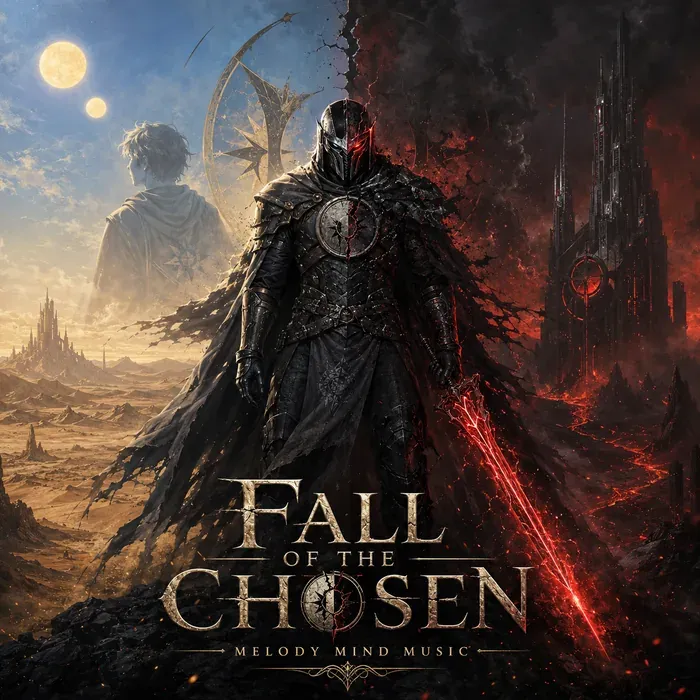
Fall of the Chosen
Fall of the Chosen charts a hero’s descent through prophecy, betrayal and forbidden power in a dark symphonic metal tragedy of love, fear and ruin in flames.
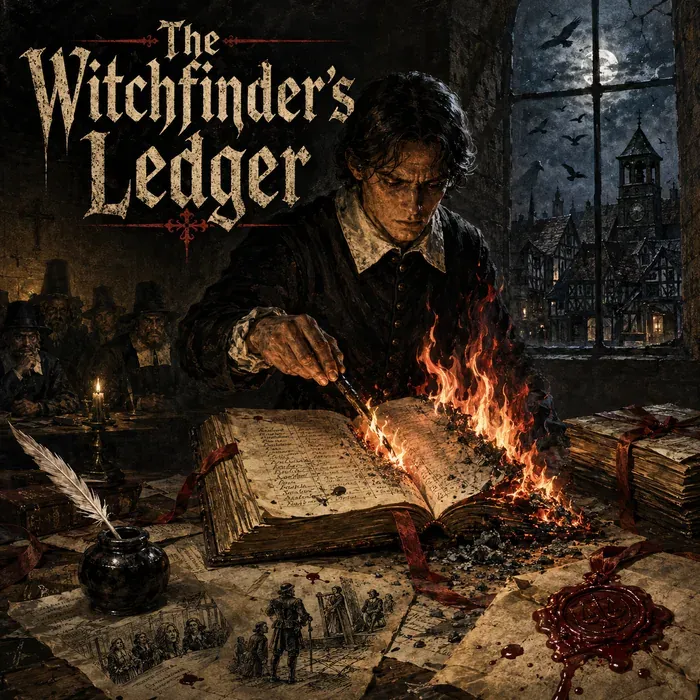
The Witchfinder’s Ledger
The Witchfinder’s Ledger is a dark NWOBHM concept album about fear, false justice and resistance, driven by galloping riffs and dramatic storytelling.
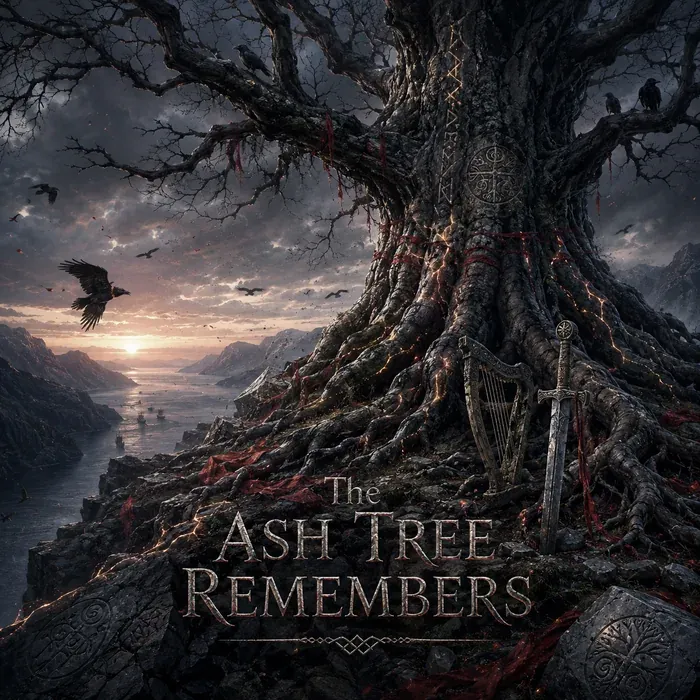
The Ash Tree Remembers
The Ash Tree Remembers is an epic Viking metal journey through Yggdrasil, war, memory, death and renewal, told through crushing riffs and Nordic ritual fires.
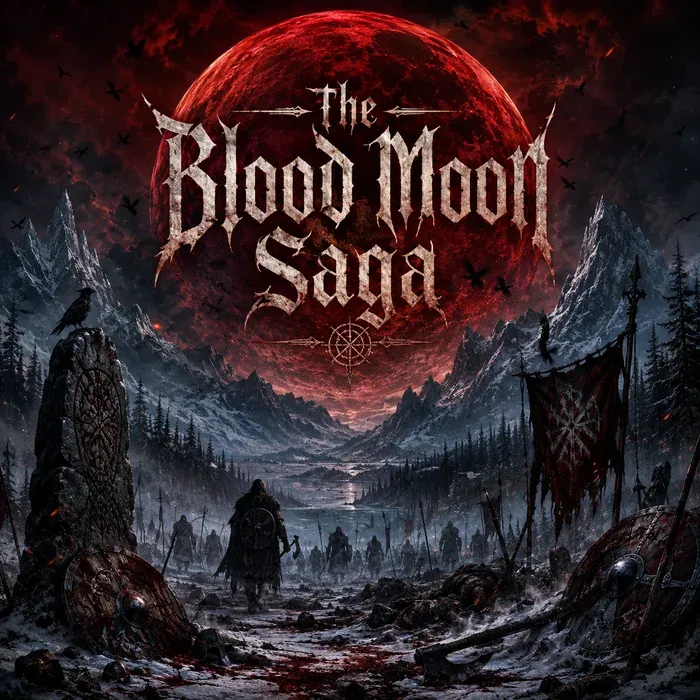
The Blood Moon Saga
The Blood Moon Saga is a dark Viking metal concept album of blood feud, prophecy, ritual war, tragic revelation, and apocalyptic Nordic atmosphere.
Community
Comments...
Read or leave a comment about this album. Comments are provided by Cusdis and load only after you allow the comments feature.
Enable comments to load the discussion from Cusdis.