

The Intern Who Deleted Production
Made with generative AI; directed and curated by Daniel.
The Intern Who Deleted Production is a savage comedy-thrash concept album about one fatal command and the broken company that made it inevitable from day one.
Tracklist
14 tracks
Liner Notes
A short editorial read on the album world, sound, and standout moments.
About the Album
The Intern Who Deleted Production is not a novelty record about a careless rookie pressing the wrong button. It is a comedy-thrash concept album about how institutions manufacture disasters, then search for the youngest and least protected person in the room to carry the blame. Set inside the fictional software company Infinite Loop Solutions, the album follows Jonas Weber, an eager intern who arrives ready to learn and instead finds automated onboarding, abandoned documentation, missing mentors and administrative privileges no trainee should receive. What begins as office satire develops into a full-scale systems collapse, driven by fast riffs, clipped rhythms and a story that becomes more uncomfortable the more plausible it sounds.
The musical foundation is thrash metal: hard down-picked guitars, urgent drums, active bass lines and choruses that land like emergency broadcasts. Melodic hard rock opens space for Jonas’s guilt, punk sharpens the confrontation with management, and brief progressive turns trace the tangled infrastructure beneath the outage. The shifts are purposeful. Every tempo change and stripped-back passage reflects a new stage in the disaster, while a recurring four-note motif functions like a system process beneath the songs—orderly at first, frantic during the deletion cascade, then slowed to the pulse of a green server light in the closing track.
The opening run is funny and unsettling. “Welcome, Temporary Human” captures the sterile friendliness of automated onboarding while an entire office fails to provide an actual person. “Here Are All the Permissions” turns access management into a chant of institutional negligence, and “Your Mentor Is in a Meeting” gives Daniel’s absence tragic weight without pretending he is indifferent. By “Clean Up the Test Environment,” the comedy has narrowed into pressure: a vague cost-saving ticket, an unreachable owner and a deadline that rewards action over understanding. “Prod Looks Just Like Staging” makes the danger concrete. Two almost identical environments, contradictory labels and a broken dashboard leave Jonas with every reason to stop—and no one available to make stopping feel permitted.
“One Command to Remove Them All” delivers the catastrophe with disciplined thrash storytelling. The song follows dependencies, routes, keys and services as a supposedly harmless cleanup action dismantles the foundation beneath the company. That precision makes “Production Has Left the Building” hit harder. Customer systems vanish, Project Phoenix collapses, TitanBank loses access and the status page remains falsely green because its monitoring lives inside the dead environment. The satire is exact, but the music never winks at the damage. The joke has become an outage, and the outage has become a crisis.
“Four Thousand Alerts” is the album’s first great peak: a relentless flood of monitoring noise, support calls, security warnings and duplicated incident threads. Its speed mirrors the moment when information stops helping because everything is labelled critical. From there, the record enters its darkest stretch. “Blame the Intern” is a hard punk-inflected indictment of corporate storytelling. Victor, Leon, Legal and the external consultants begin editing themselves out of the timeline while Jonas becomes the cleanest possible explanation. The chorus is built to shout, but the verses keep the accusation specific: altered ticket wording, expired dashboards, automated roles and public statements written before the facts are known.
The political and emotional centre is “This Was Always Going to Happen.” Mara, Priya, Sabine, Daniel and Klaus build a wall of ignored reports showing that the outage was not unpredictable. Deletion locks were rejected, backup tests postponed, project names left dangerously similar and destructive actions allowed without two-person approval. The song refuses both easy absolution and easy condemnation. Jonas executed the command, but the company designed the conditions in which one careful, unsupported person could remove Production. Responsibility is not erased; it is traced beyond the hand nearest the keyboard.
The final act widens the story from operational failure to possible breach. In “The Hidden Account,” Jonas discovers an undocumented service identity that had exported data long before his internship began. His command did not create the intrusion; it interrupted it. “Gregor’s Locked Backup” introduces a battered USB drive containing encrypted infrastructure maps, backups and the file WHEN_THE_LIGHT_TURNS_RED. “Restore Failed” rejects the easy finale. The data may still exist, but recovery depends on keys, routes and identities that no longer do. The company remains offline, customers prepare legal action and Victor prepares an all-hands meeting that will reduce years of negligence to one “individual user.”
“The Green Light Blinks Again” closes the album with restraint rather than victory. Beneath Building B, a decommissioned server wakes, recognises the hidden account and resumes an unfinished process. Above it, management begins explaining the disaster. Below it, the system begins writing a different account. The final image—a green light blinking four times, then once—connects the album to the next chapter of the series while leaving this record complete in its own terms: the outage is unresolved, the truth incomplete and the infrastructure still remembers instructions its owners forgot.
The Intern Who Deleted Production is worth hearing because it combines the physical momentum of thrash metal with disciplined narrative writing. Its humour comes from recognisable language, bad processes and evasive management, not random tech references. Its anger is aimed at systems of power rather than easy caricatures. Most importantly, its songs work as songs: strong titles, distinct hooks, changing perspectives and an arc that rewards hearing the album in order.
Recommended if you like: Political punk, post-punk, protest rock, anti-authoritarian lyrics, dystopian concept albums, AI-assisted music projects.
This is an album for listeners who want riffs with consequences, workplace satire with teeth and a concept story that understands how catastrophe happens: not through one villainous act, but through years of decisions that seemed small until they became impossible to ignore.
Production Notes
All tracks were generated with AI music models, then processed for the final sound. No human performance recordings are used.
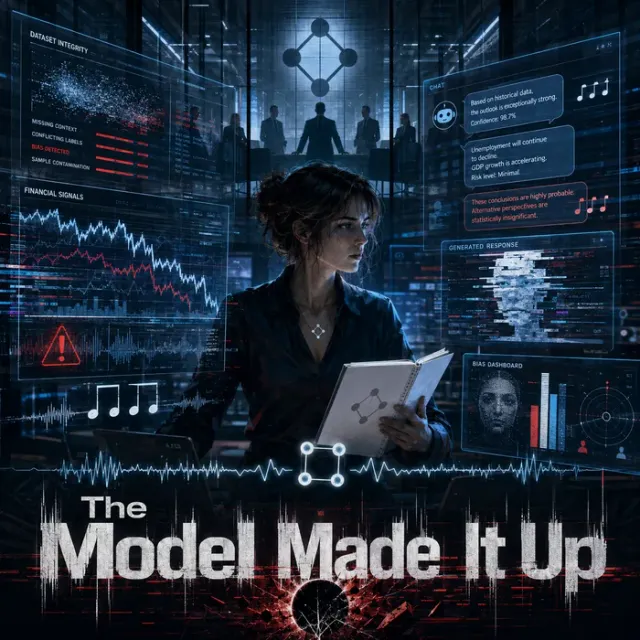
The Model Made It Up
A biting progressive electronic metal concept album about AI hype, bad data, corporate ambition, hallucinations, bias and the fight for human control at work.
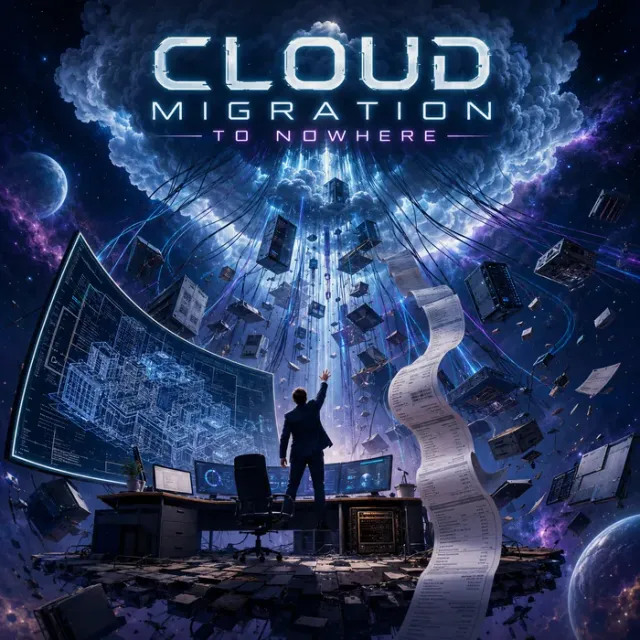
Cloud Migration to Nowhere
Cloud Migration to Nowhere blends progressive metal, space rock and corporate satire into a sharp concept album about cloud costs, chaos and control at scale.
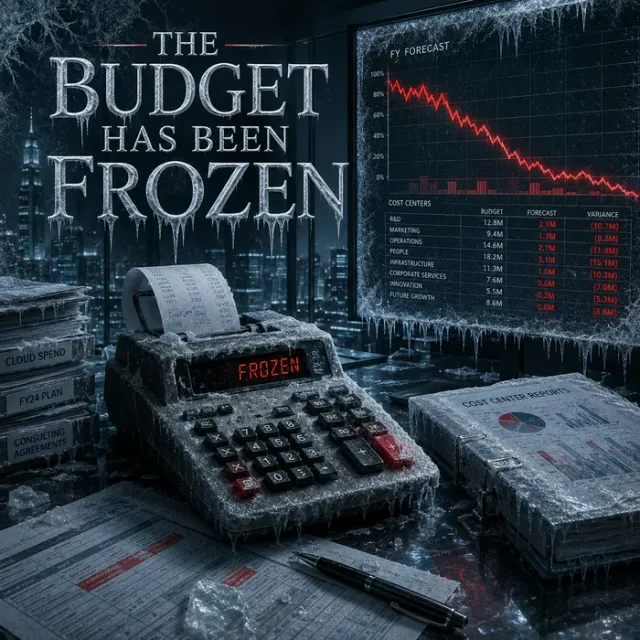
The Budget Has Been Frozen
A razor-sharp progressive rock and jazz metal concept album about frozen budgets, hidden costs, corporate hypocrisy and financial revolt in the modern office.
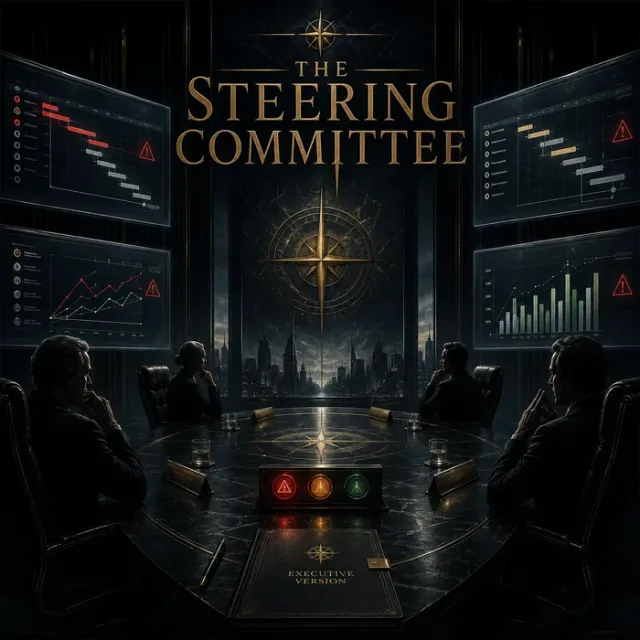
The Steering Committee
The Steering Committee turns corporate power games into progressive metal, exposing four leaders, four timelines and one project pushed toward collapse today.


Download the complete album
Get the full ZIP package with tagged audio files, cover artwork, and album metadata.
Help keep the albums coming
If this album was useful or fun to listen to, a small contribution helps cover hosting, tools, and new music experiments.