


A tragic symphonic metal opera about a doomed queen, betrayal, forbidden love and a crown surrendered to save a kingdom from ashes.
Tracklist
Liner Notes
A short editorial read on the album world, sound, and standout moments.
About the Album
The Last Crown of Ashes is a grand, tragic and deeply cinematic symphonic metal opera built around the final year of a dying kingdom. It does not simply tell the story of a queen losing her throne; it follows the collapse of an entire political order, one built on ritual, inherited guilt, false prophecy and the dangerous belief that power can save people without ever listening to them.
Musically, the album belongs to the tradition of symphonic metal opera, dark power metal and cinematic gothic metal. It thrives on scale: huge orchestral openings, dramatic strings, cathedral choirs, marching percussion, blazing guitars and vocal performances that feel theatrical without becoming artificial. Aurelia’s voice should feel powerful but wounded, regal but human. Lord Vael, her advisor and secret betrayer, brings a colder, darker vocal presence, while General Kaelen, the enemy commander, adds a heroic and tragic counterweight. The People’s Choir gives the album one of its central emotional layers, because the story is never only about rulers, generals and prophecy. It is also about the ordinary people who pay the price when empires protect themselves.
The early tracks establish the album’s fatal atmosphere beautifully. “Coronation in the Smoke” opens the gates with funeral bells, heavy royal imagery and the sense that Aurelia has inherited not a kingdom, but a curse. “The Throne Remembers Blood” deepens that idea, turning the throne into almost a living witness to centuries of violence. These songs give the album its moral foundation. The kingdom was not destroyed by outsiders. It was hollowed out from within by the very structures that claimed to protect it.
As the story moves into the court intrigue of “Whispering Halls” and the chilling villain portrait “Vael’s Promise,” the album becomes sharper and more dangerous. Vael is not a cartoon villain. He represents something more believable: the advisor who speaks of order while preparing betrayal, the political manipulator who turns fear into policy, the man who believes people can be saved only by being controlled. His presence gives the album a strong anti-authoritarian edge, even within its fantasy-metal setting. The listener can enjoy the castles, crowns and burning throne rooms, but beneath the gothic surface there is a very human warning about power.
The emotional heart of the album arrives with General Kaelen. “Enemy at the Golden Gate” introduces him not as a monster, but as a soldier who sees the suffering behind the walls he has been ordered to break. His duet with Aurelia in “A Queen and a Soldier” gives the album its most intimate dramatic turn. Their forbidden love works because the bond is political as well as romantic. They recognize in each other the exhaustion of duty. Both have been used by systems older than themselves. Both are expected to obey banners, bloodlines and borders. Their connection becomes dangerous because it allows them to imagine a world beyond those things.
“The Oracle of Cinders” shifts the album into mythic territory, but the prophecy does not feel like a convenient fantasy device. It functions like a moral reckoning. Aurelia is told what every ruler in the album tries to avoid: the crown must burn, or the people will. From that point on, the story tightens. “Bells Above the Burning City” is the album’s great catastrophe, a track that should sound massive, urgent and devastating. The capital does not fall through honorable battle alone; it burns because betrayal opens the way. That distinction matters. The album keeps returning to the idea that collapse often begins behind closed doors long before it reaches the streets.
The final third is where The Last Crown of Ashes becomes especially rewarding. “No Crown Can Save Us” strips away the illusion that monarchy, tradition or symbolic glory can heal a starving city. “Ashes Over Aurelia” gives the queen her lowest and most human moment, standing among ruins and understanding that good intentions are not enough. “The Last Royal Flame” then transforms grief into action, making Aurelia heroic not because she defends the throne, but because she stops centering it.
By the time “Kneel No More” arrives, the album has become more than a royal tragedy. It has become a liberation story. The people reject Vael, but they also reject the old pattern of kneeling to whoever holds power. That makes the finale, “The Last Crown of Ashes,” feel earned. Aurelia’s final act is not conquest. It is surrender — not to an enemy, but to truth. She lays down the crown so the living may rise again.
Production Notes
All tracks were generated with AI music models, then processed for the final sound. No human performance recordings are used.
Full album download
Download the complete album
Get the full ZIP package with tagged audio files, cover artwork, and album metadata.
Support MelodyMind
Help keep the albums coming
If this album was useful or fun to listen to, a small contribution helps cover hosting, tools, and new music experiments.
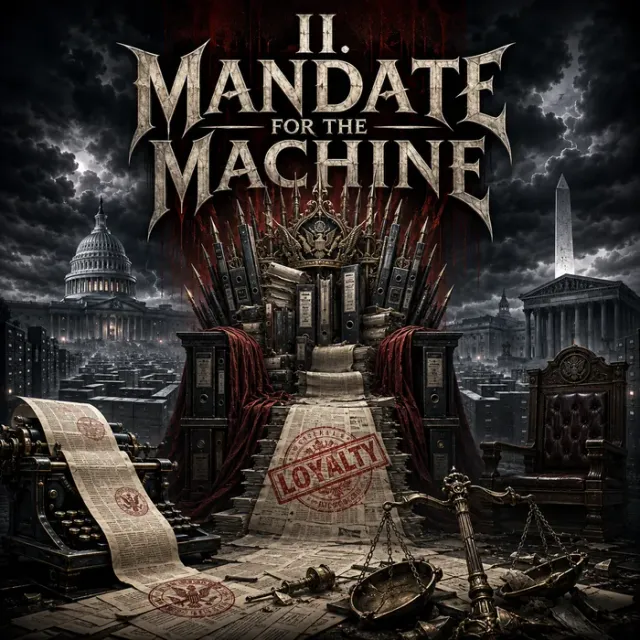
Mandate for the Machine
A dark symphonic metal opera about Project 2025, executive power and democracy under pressure—cold, theatrical and fiercely anti-authoritarian over 14 tracks.
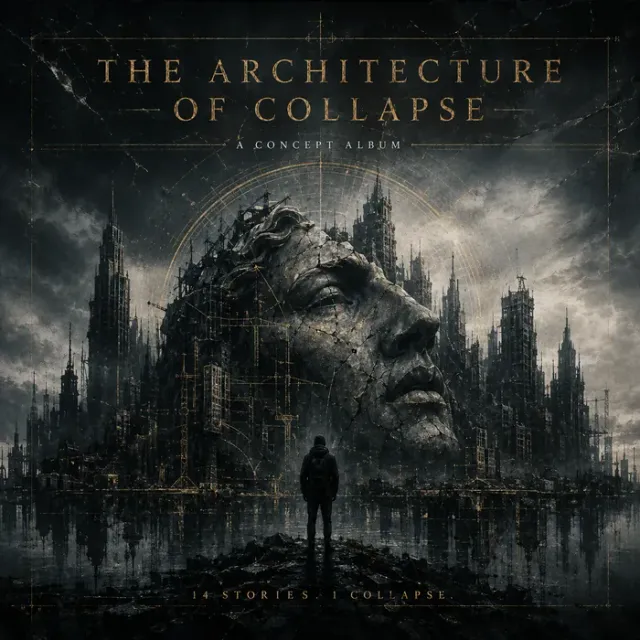
The Architecture of Collapse
The Architecture of Collapse is a dark symphonic metal opera about broken systems, burnout, rage, and one developer losing himself inside the machine at work.
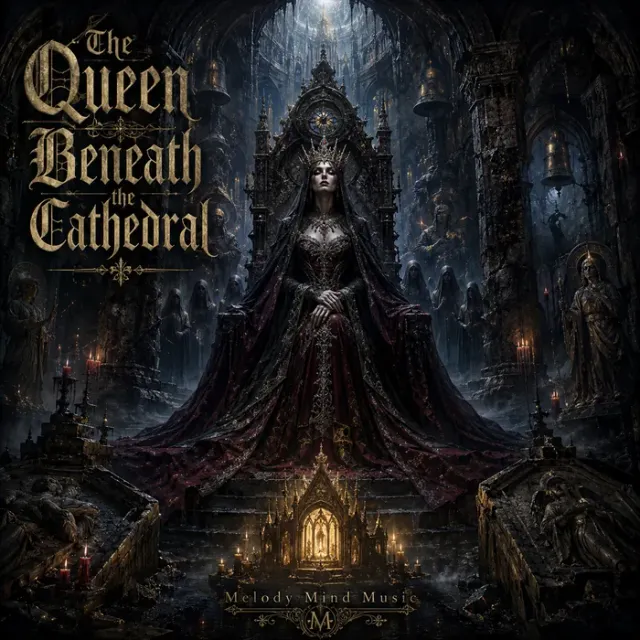
The Queen Beneath the Cathedral
A gothic metal opera about a buried queen, a stolen crown, and the fire that exposes a kingdom's official history.
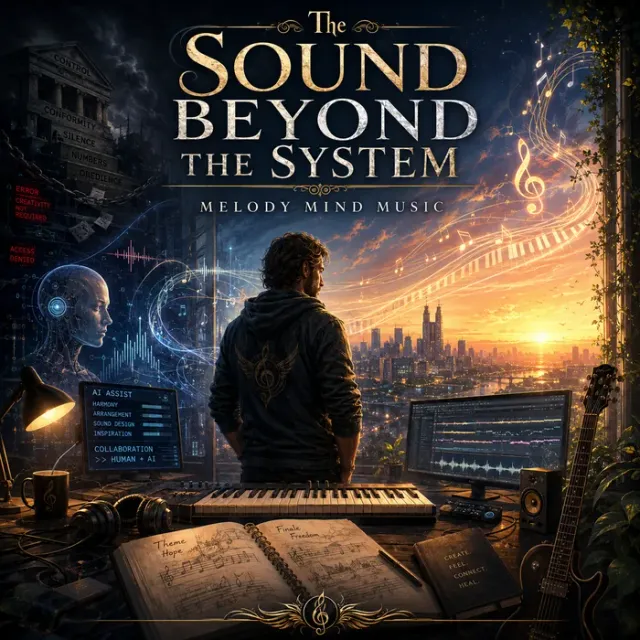
The Sound Beyond the System
Symphonic metal follows recovery from workplace burnout as an AI-assisted music project gives its creator a life beyond the system.


