


The Mead Hall Oath is a dark Viking metal saga of loyalty, betrayal, revenge and memory, forged in thunderous riffs and mournful Nordic fire beneath cold ash.
Tracklist
Liner Notes
A short editorial read on the album world, sound, and standout moments.
About the Album
The Mead Hall Oath does not treat Viking metal as costume drama. Its warriors are not invincible, and its violence is never offered as spectacle. This is an album about what happens after men place absolute faith in one another, speak loyalty aloud, and discover that danger was already seated at their table. Across fourteen songs, Melody Mind Music turns a smoke-blackened mead hall into a chamber of law, memory, suspicion, and grief.
The opening title track establishes the album’s central ritual with patience. Snow melts from heavy cloaks, fingers touch the rim of a shallow bronze bowl, and drinking horns rise beneath an old boar banner. The scene feels communal through physical details: table-striking rhythms, low male voices, tom-heavy drums, weathered guitar harmonies, and a recurring three-note tagelharpa figure. When the chorus declares that oak may split and iron rust, it sounds less like a slogan than a belief the remaining songs are preparing to test.
That test begins quietly. “Under the Boar Banner” carries the warmth of a feast song, but its confidence is already fraying. “The Horn Turns Slowly” shifts into an unsettled meter as the narrator notices Ketil rotating his drinking horn whenever questions of land, loyalty, or power enter the conversation. The gesture is small enough to dismiss, which makes it effective. Instead of announcing its villain with obvious menace, the album lets suspicion accumulate through glances, altered guard positions, private grievances, and conversations that stop when another man approaches.
The middle chapters use contrast well. “Iron Rings in the Pillars” moves with doom-laden weight, turning the hall’s construction into a metaphor for a society that looks solid while its human bonds weaken. “Whispers Beneath the Rafters” uses antiphonal phrases and clipped guitar figures to suggest messages travelling beneath the celebration. Then “My Brother by the Hearth” strips the arrangement back for its most intimate exchange. The narrator confides in Eirik, yet neither man acts because suspicion without proof could destroy an innocent reputation. Their caution is honorable and disastrous.
From there, the record tightens its grip. “Before the Benches Break” is built around interrupted motion, hard stops, misplaced weapons, and the delay between recognizing danger and preventing it. The cup rolling across the floor leads directly into “Blood in the Oak,” the album’s central catastrophe. Benches overturn, the high seat falls, the boar banner burns, and blood travels through the grooves of the table where the oath was sworn. The song is forceful, but never gleeful. Its heaviest moment is not a killing blow; it is the narrator holding Eirik as life leaves his body.
The aftermath gives the album its depth. “Empty Seats in Winter” refuses to rush from massacre to revenge. Widows enter the hall, bodies are named, and familiar objects become unbearable evidence. The cracked shield, an unfinished wooden boar, and an unmoved chair carry more weight than an abstract declaration of sorrow. Even when the survivors swear “The Wolf Oath,” vengeance is framed as a discipline requiring limits. They vow not to burn farms, kill children, or punish the powerless. The wolf represents measured pursuit rather than frenzy.
“Across the Black Fjord” extends that moral uncertainty into a slow rowing cadence. Cold, exhaustion, and repetition narrow the narrator’s thoughts until Ketil’s face begins to replace Eirik’s in his memory. Its sharpest observation is that hatred can preserve the crime while erasing the person supposedly being avenged. “The Law of Ash and Iron” answers that danger by forcing the survivors to define justice before they attack. Its pauses make each condition sound binding. No roof is to be fired. The guilty must answer. The helpless must be spared.
The final confrontation, “No Peace for Oathbreakers,” delivers the album’s largest surge of melodic guitars and martial drums without converting the ending into easy triumph. Ketil is defeated, the stolen banner is recovered, and those who surrender are allowed to live. Yet the chorus changes the meaning of victory by admitting that judgment cannot revive the dead. “One Cup for the Dead” returns to the hall in thawing weather. The bronze bowl is bent, the banner remains burned, and no repair is allowed to hide what happened. Names are spoken before a final cup is poured for Eirik.
Production Notes
All tracks were generated with AI music models, then processed for the final sound. No human performance recordings are used.
Full album download
Download the complete album
Get the full ZIP package with tagged audio files, cover artwork, and album metadata.
Support MelodyMind
Help keep the albums coming
If this album was useful or fun to listen to, a small contribution helps cover hosting, tools, and new music experiments.
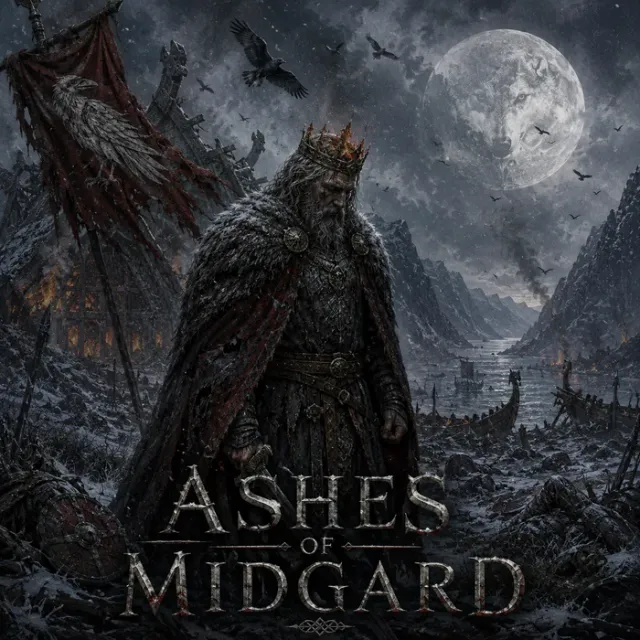
Ashes of Midgard
Ashes of Midgard is a tragic Viking metal concept album of fire, frost, broken oaths and a dying kingdom fighting to keep its memory alive after the last war.
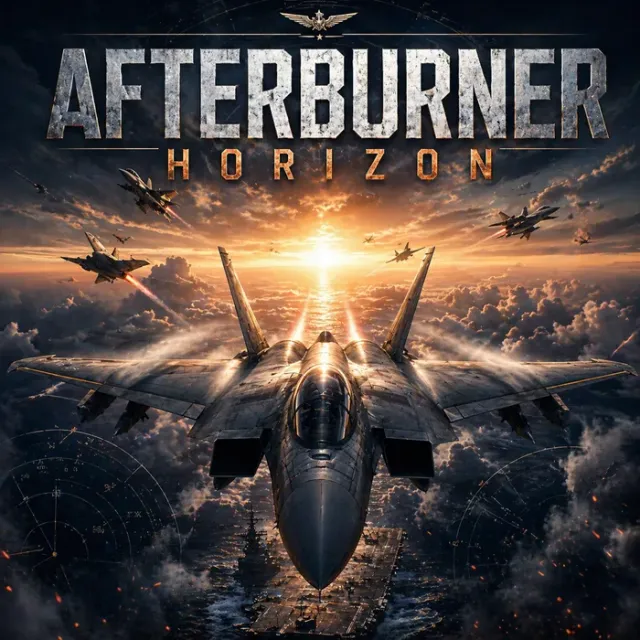
Afterburner Horizon
A taut instrumental aviation score built on brass, strings, and heavy percussion. It favors mission pacing, cockpit pressure, and the uneasy silence after impact over simple action-music spectacle.
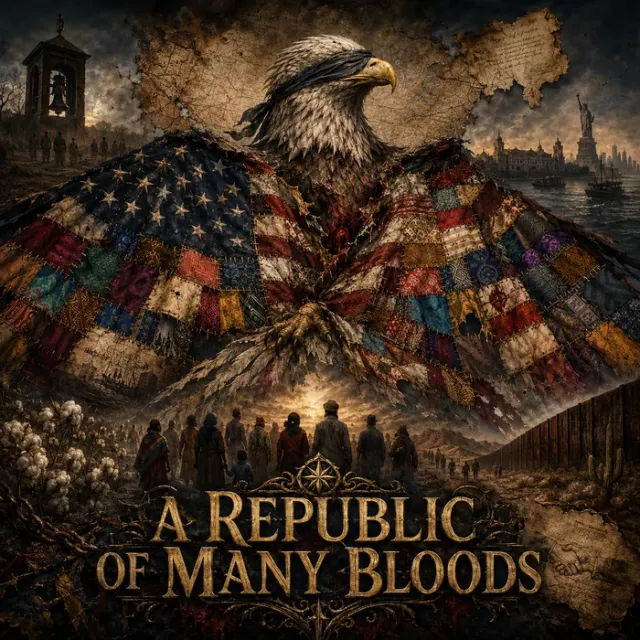
A Republic of Many Bloods
A symphonic metal opera about buried American histories, broken national myths, and the unfinished work of plural democracy.
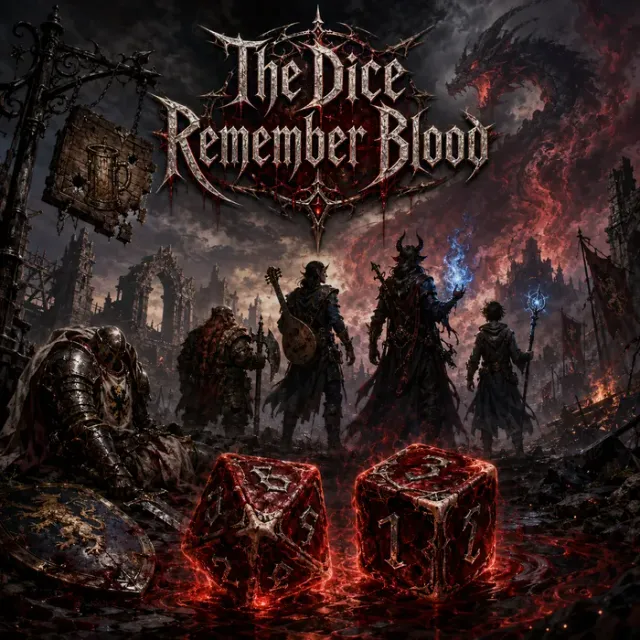
The Dice Remember Blood
The Dice Remember Blood is a dark fantasy metal saga of cursed choices, lost identities and grim victories, told through all 14 cinematic, story-driven songs.


