


Post-punk follows media manipulation, manufactured outrage, and the effort to recover truth from a profitable cycle of fear.
Tracklist
Liner Notes
A short editorial read on the album world, sound, and standout moments.
About the Album
The News Is a Weapon is a full AI-assisted concept album by Melody Mind Music — a cold, paranoid, politically charged post-punk record that feels like being trapped inside a broken news channel at 3AM. It is not an album about politics in the clean, slogan-like sense. It is an album about the machinery around politics: the screens, the feeds, the headlines, the fear cycles, the monetized outrage, and the way modern media can turn ordinary people into enemies before they even understand what happened.
The record opens with “Static at 3AM,” setting the scene immediately: a room lit by television glow, a narrator unable to sleep, and a broadcast that seems to stare back. From there, the album unfolds like a sequence of corrupted transmissions. “Manufactured Panic” and “The Headline Factory” reveal fear as an industry, not an accident. Headlines are not treated as neutral information here; they are shown as products, sharpened and packaged to provoke a reaction before anyone has time to think.
As the story moves forward, the album leaves the television studio and enters the bloodstream of social media. “Blue Check Riot” captures the ugly theatre of verified outrage, where public grief becomes performance and status is built on reaction speed. “Enemies in the Comments” is one of the album’s most human moments, showing how neighbors, friends and families are pulled into digital hostility. The song understands something important: manipulation does not only happen from above. It also happens when people are exhausted, frightened and lonely enough to repeat the script themselves.
One of the defining qualities of The News Is a Weapon is that it avoids easy comfort. It does not pretend that one side of the screen is innocent and the other side is corrupt. Instead, it examines the system that benefits when everyone is angry, suspicious and divided. “Outrage Economy” makes that theme explicit, turning rage into a market language: fear is bought, hate is sold, and attention becomes the currency. The result is a track that feels both furious and frighteningly plausible.
The middle of the album becomes darker and more authoritarian. “Ministry of Noise” imagines propaganda not as silence, but as overload. In this world, censorship is not only about hiding information; it is about flooding people with so much noise that truth becomes impossible to hear. That idea carries into “Deepfake Halo,” a chilling track about synthetic faces, stolen voices and manufactured proof. The song captures the modern anxiety that even evidence itself can now be dressed up, manipulated and weaponized.
By the time the album reaches “Truth Decay,” the emotional core becomes clear. This is not only a political album; it is a record about exhaustion. What happens to a person when reality is constantly disputed? What happens when every fact arrives already wounded? The song slows the pace and lets the damage breathe, giving the album one of its most memorable and haunting chapters. It is bleak, but not empty. Beneath the corrosion, there is still a stubborn need to name what is real.
“The Anchor Lies Beautifully” shifts the focus back to the polished face of mainstream deception. The track is sharp because it understands that lies do not always arrive screaming. Sometimes they arrive calm, well-lit, professionally framed and reassuring. That makes the song especially effective: it attacks the elegance of manipulation when propaganda learns to look respectable.
The final stretch of the album turns from diagnosis toward resistance. “Divide and Broadcast” is a fast, confrontational punk track about the deliberate splitting of communities into rival camps. “Dead Air Democracy” follows with a bleaker reflection on public discourse, where everyone is technically speaking but nobody is truly heard. Then comes “Kill the Signal,” the album’s most direct act of rebellion. It does not offer naïve salvation, but it does suggest that refusal matters: switching off, stepping away, speaking without a camera, rebuilding trust outside the machine.
The closer, “After the Broadcast,” is exactly where the album earns its weight. It does not end with a clean victory. The towers are not gone. The wires are not dead. The hunger for panic still exists. But the song finds a fragile human space after the noise — a place where people might begin again, slowly, awkwardly, without the comfort of slogans. That restraint makes the ending feel more powerful than a simple triumph would have been.
Production Notes
All tracks were generated with AI music models, then processed for the final sound. No human performance recordings are used.
Full album download
Download the complete album
Get the full ZIP package with tagged audio files, cover artwork, and album metadata.
Support MelodyMind
Help keep the albums coming
If this album was useful or fun to listen to, a small contribution helps cover hosting, tools, and new music experiments.
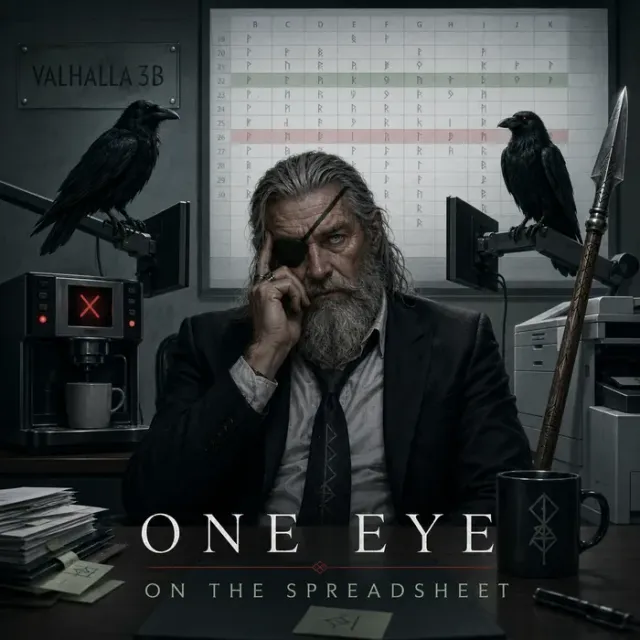
One Eye on the Spreadsheet
One Eye on the Spreadsheet turns Odin into an underpaid consultant in a sharp post-punk satire on office burnout, broken systems, and wisdom sold by the hour.
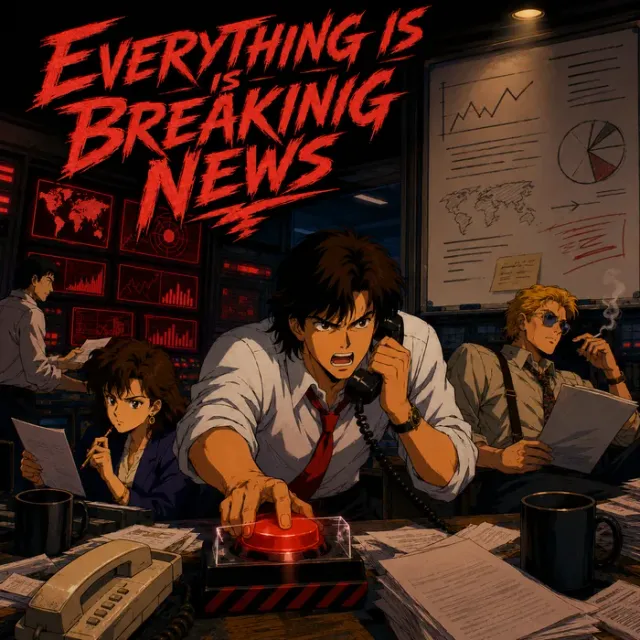
Everything Is Breaking News
Current's newsroom builds a faster breaking-news workflow and beats rival Blink. Then success makes red alerts routine. Classic metal meets deadline pressure.
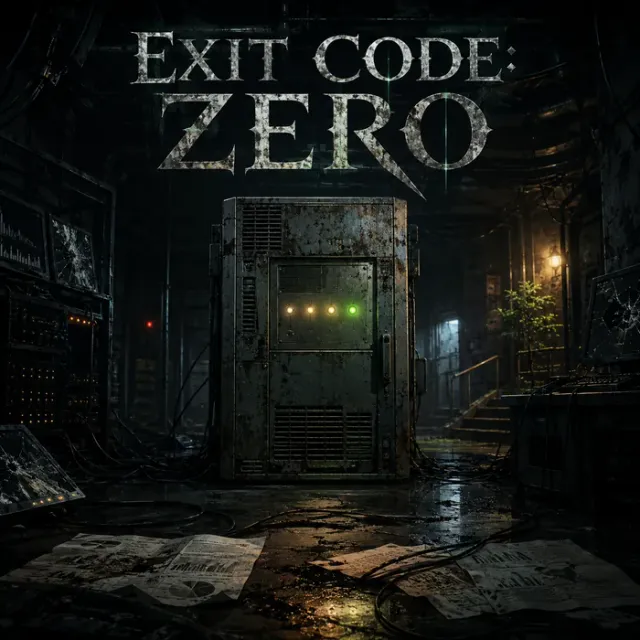
Exit Code: Zero
Exit Code: Zero turns corporate collapse into melodic heavy metal—an urgent, darkly witty finale about blame, truth, recovery, and starting over with purpose.
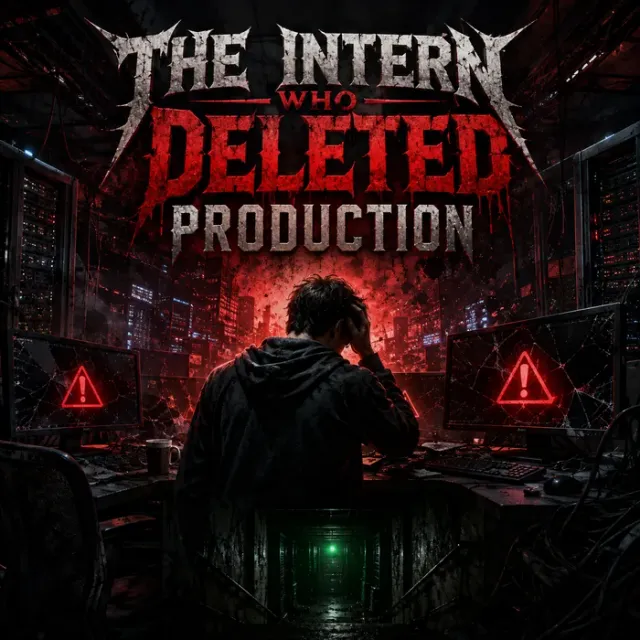
The Intern Who Deleted Production
The Intern Who Deleted Production is a savage comedy-thrash concept album about one fatal command and the broken company that made it inevitable from day one.


