

Heartland Rock
The Night Train Ledger
The Night Train Ledger is a vivid Heartland Rock live album about Europe's night trains, fragile routes, human stories, rain-soaked stations and hope at dawn.
Liner Notes
A short editorial read on the album world, sound, and standout moments.
About the Album
The Night Train Ledger turns a single overnight journey from Berlin to the Adriatic into a broad, deeply human Heartland Rock narrative. Recorded in the imagined setting of a converted locomotive workshop, the album places its band between two restored sleeping cars, surrounded by worn suitcases, warm lamps and the steady presence of an old station clock. The result feels less like a staged concept and more like a live document recovered from a night in which strangers briefly became a community.
Across fourteen songs, the album follows passengers whose private reasons for travelling gradually intersect. A nurse leaves Berlin after one final exhausting shift. A father carries a blue wool cap and an apology he does not know how to deliver. A young musician tries to reach Trieste with little more than a guitar and a damaged ticket. A retired conductor remembers the railway as a public service built around ordinary lives. A woman returns south after twenty years, unsure whether home will recognize her or whether she will recognize it.
These stories are not arranged as isolated character sketches. They move forward together, station by station, through Prague, Vienna, Graz and Ljubljana. Small objects become emotional anchors: a silver spoon from a dining car, a crumpled ticket, rain on compartment glass, an old ledger, the number 214. Each returns with a changed meaning. What begins as travel detail gradually becomes evidence of memory, neglect, connection and responsibility.
Musically, The Night Train Ledger stays rooted in Heartland Rock, but avoids the obvious temptation to imitate American highway mythology. Its landscape is unmistakably European: multilingual announcements, narrow sleeper compartments, wet platforms, border crossings and ageing rolling stock. Ringing electric guitars, twelve-string acoustic textures, Hammond organ, harmonica and tom-heavy live drums create a broad, road-worn sound, yet the production remains intimate enough for the characters to matter. The recurring three-note train motif ties the record together without turning every song into the same arrangement.
The album’s strongest quality is its sense of scale. Some songs open outward into full-band choruses built for an audience to sing back. Others pull close to the microphone and allow a voice, a piano or a lightly brushed drum pattern to carry the scene. The quieter middle sequence is especially effective. “The Silver Spoon,” “Twenty Years South” and “Carriage 214 Off the Line” slow the journey at exactly the right moment, giving memory and vulnerability room before the narrative reaches its central crisis.
That crisis arrives when the ageing sleeper carriage must be removed from service in Vienna. It is a practical failure rather than a spectacular disaster, which makes it more convincing. The passengers are not threatened by villains or cinematic catastrophe, but by underfunding, worn equipment and the possibility that useful connections can disappear through years of quiet neglect. The album understands that infrastructure becomes political precisely when it stops being visible as part of everyday life.
From there, the record grows into something larger than a collection of individual regrets. Passengers carry one another’s luggage, share seats, record their reasons for travelling and continue without the comfort they paid for. The repeated line, “We crossed the borders while the cities slept,” gathers force with every return. At first it sounds romantic. Later it becomes a statement about what night trains actually do: they connect workers, families, students, patients, musicians and people who cannot simply choose a faster, more expensive alternative.
The live-album framing gives these moments weight. Crowd responses are not used as decoration but as part of the storytelling. When the audience joins the central refrain, the listener can imagine the converted Berlin workshop answering the passengers inside the train. By the finale, “While the Cities Slept,” the separation between stage, carriage and audience has almost disappeared. The concert becomes the ledger, and the ledger becomes a public record of lives usually reduced to ticket numbers.
There is also pleasure in the craftsmanship. Choruses rise from specific scenes instead of arriving as generic emotional commands, and the instrumental changes follow the geography and pressure of the story. Slide guitar colours Prague’s rain, piano carries the returning woman’s hesitation, and the organ-driven later songs restore momentum after Vienna. Even the applause has dramatic purpose: it turns private testimony into shared recognition, giving the album the warmth of a double-live set without sacrificing narrative precision.
Recommended if you like: Political punk, post-punk, protest rock, anti-authoritarian lyrics, dystopian concept albums, AI-assisted music projects—especially when those instincts are channelled through character-driven Heartland Rock rather than blunt slogans. The album shares their concern with power, public systems and the people left out of official narratives, but it makes its argument through observation, dialogue and lived detail.
The Night Train Ledger is ultimately worth hearing because it respects both its subject and its listeners. It does not romanticize rail travel without acknowledging discomfort, delays and uncertainty. It does not treat nostalgia as an answer. Instead, it asks what is lost when shared routes disappear, who pays the price, and why ordinary journeys deserve to be remembered.
By the time the train reaches Trieste, no one has been magically repaired. Forgiveness remains uncertain, home has changed, and the threatened route is still fragile. Yet the album ends with an open page rather than a closed book. That choice gives the record its emotional power. The journey reaches the sea, but the story remains available to whoever travels next.
Production Notes
All tracks were generated with AI music models, then processed for the final orchestral sound. No human performance recordings are used.
Full album download
Download the complete album
Get the full ZIP package with tagged audio files, cover artwork, and album metadata.
Support MelodyMind
Help keep the albums coming
If this album was useful or fun to listen to, a small contribution helps cover hosting, tools, and new music experiments.
Join the conversation
Reactions from the web
Mentions, likes, reposts, and replies from IndieWeb and Fediverse-friendly sites can appear here after you allow community features.
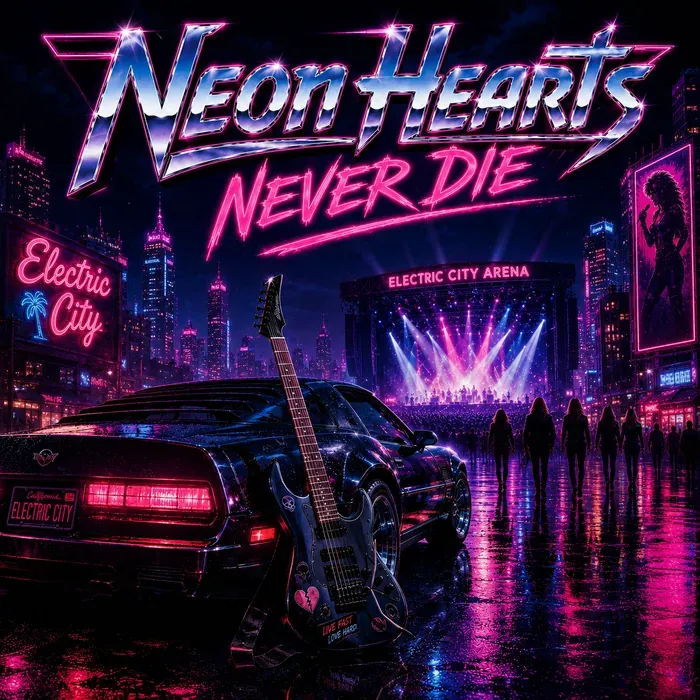
Neon Hearts Never Die
Neon Hearts Never Die is a neon-lit glam rock concept album of big riffs, lost love, betrayal and comeback dreams in Electric City’s midnight glow.

Neon Hearts
Neon Hearts turns one long Seoul night into a cinematic K-pop romance of synth-pop glow, intimate R&B, missed turns, confessions, and bittersweet first light.
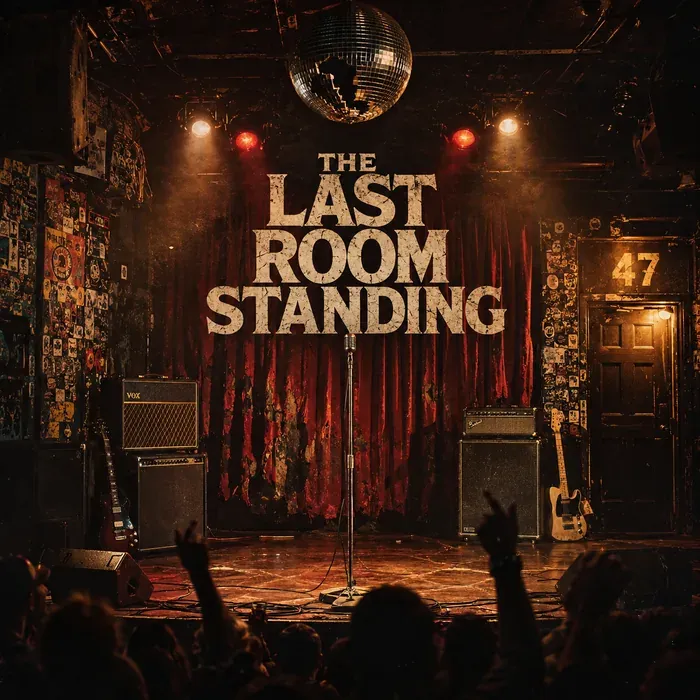
The Last Room Standing
A raw live alternative rock album about vanishing music clubs, broken stages, rising rents, and people fighting to keep one vital room alive together tonight.
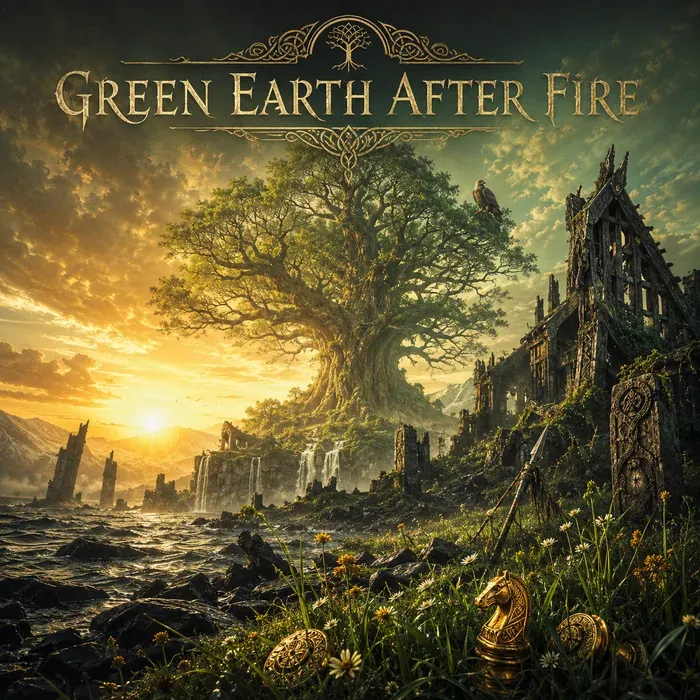
Green Earth After Fire
A Nordic folk Viking metal journey beyond Ragnarök, where gods and humans face memory, forgiveness, power, and the fragile promise of renewal. After the fire.
Community
Comments...
Read or leave a comment about this album. Comments are provided by Cusdis and load only after you allow the comments feature.
Enable comments to load the discussion from Cusdis.