


A live rap-funk album brings brass, soul, protest lyrics, and crowd response into one politically charged performance.
Tracklist
Liner Notes
A short editorial read on the album world, sound, and standout moments.
About the Album
The Revolution Will Be Performed Live sounds like the night when a concert stops being entertainment and starts becoming a public gathering. Framed as a fictional open-air live recording, the album places the listener in the middle of a charged crowd: stage lights cutting through smoke, brass players warming the air, a DJ scratching against the noise of the city, and an MC who understands that rhythm can carry anger without flattening it into slogans. This is hip-hop as testimony, funk as motion, brass as alarm bell, and protest soul as collective memory.
The album opens with the title track, “The Revolution Will Be Performed Live,” and immediately establishes its central idea: the revolution here is not a distant theory, not a neat manifesto, and not a slogan printed on a shirt. It is happening in real time, with bodies in the field, voices in the dark, and a band loud enough to turn frustration into momentum. The live-concert setting matters. The crowd acts as a character in the story rather than background atmosphere. Their chants, claps and responses turn every chorus into something bigger than the MC alone. The album understands that political music works best when it gives people something to carry with them.
The early stretch of the album moves like a march. “Brass Against the Barricades” turns the horn section into a symbolic front line, while “Receipts for the Powerful” sharpens the mood into accusation. These songs are direct, but they avoid feeling flat because they are built around scenes: papers hidden in drawers, signatures, public money redirected, ordinary families absorbing the impact. The writing is most precise when it names systems through lived consequences. It does not simply say corruption is bad; it shows who gets the invoice.
By the time “War Men in Tailored Suits” arrives, the album has widened its target. The song is one of the darker chapters, aimed at the cold distance between those who profit from conflict and those who bury the cost. It is followed by “Static on the Newsfeed,” which brings the focus back to the modern nervous system: screens, panic, headlines, outrage loops and emotional exhaustion. Together, these tracks give the album a strong political backbone. They are not abstract complaints. They describe a world where ordinary people are asked to stay calm while everything around them is monetized, militarized or turned into content.
The album’s middle section gives it real depth. “Everybody Pays” is the emotional center: a song about workers, parents, renters, nurses, teachers and families carrying consequences they did not create. It has the kind of chorus that should feel enormous in a live setting, simple enough to sing back, but weighted with truth. “Cold Hands, Warm Mic” then brings the MC closer to the listener. Instead of grand political language, it speaks from the body: cold rooms, bills on the table, numb fingers, tired faces in the crowd. This is where the record becomes more than protest. It becomes human.
That human scale keeps The Revolution Will Be Performed Live convincing. It does not treat “the people” as a vague heroic mass. It keeps returning to specific images: the tired worker, the mother counting money, the kid on someone’s shoulders, the person in the cheap seats who came straight from a shift. “The People in the Cheap Seats” may be the album’s most generous song, because it understands where the real center of any movement lies. Not backstage. Not in the VIP section. Not in the polished speech. In the back row, where people paid with time, effort and hope just to be there.
There is also humor and bite here. “Ministers of Mirrors” is a slippery funk track about spin, image politics and rehearsed compassion. “No Kings in the Green Room” turns backstage privilege into a larger metaphor, rejecting the idea that any movement should be owned by celebrities, sponsors or professional saviors. These songs give the album a needed swagger. They are angry, yes, but they are also playable, funky and alive. That balance is important. The record never sounds like it wants to lecture from a distance. It wants to get the crowd moving first, then make the truth impossible to ignore.
“Gospel for the Overworked” is the album’s soul prayer, honoring exhausted people without romanticizing exhaustion. It gives the record one of its most compassionate moments, insisting that rest, dignity and survival are political subjects too. “Sirens Cannot Sing Louder” raises the tension again, imagining fear and pressure closing in around the concert, only for the crowd to answer with collective sound. Then “Raise the Roof, Not the Rent” delivers one of the most immediate hooks on the album: a housing anthem that is furious, funny, and instantly chantable.
Production Notes
All tracks were generated with AI music models, then processed for the final sound. No human performance recordings are used.
Full album download
Download the complete album
Get the full ZIP package with tagged audio files, cover artwork, and album metadata.
Support MelodyMind
Help keep the albums coming
If this album was useful or fun to listen to, a small contribution helps cover hosting, tools, and new music experiments.
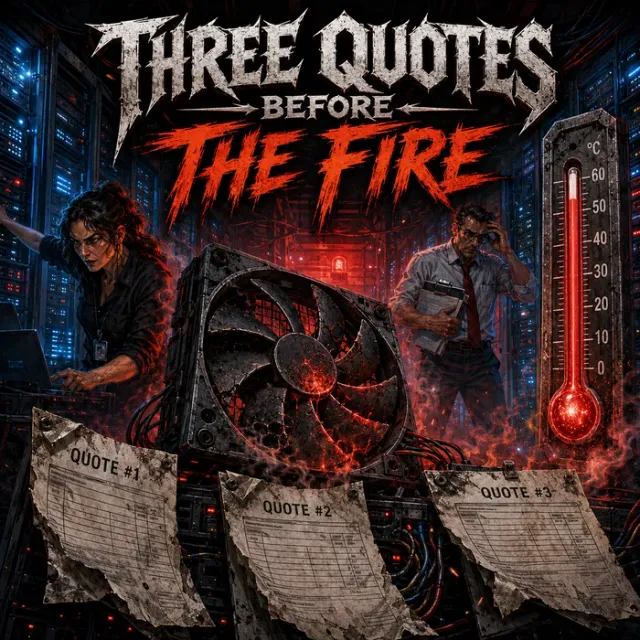
Three Quotes Before the Fire
Three Quotes Before the Fire turns procurement chaos into razor-sharp speed metal, hard-rock satire and a gripping race against an overheating IT server room.
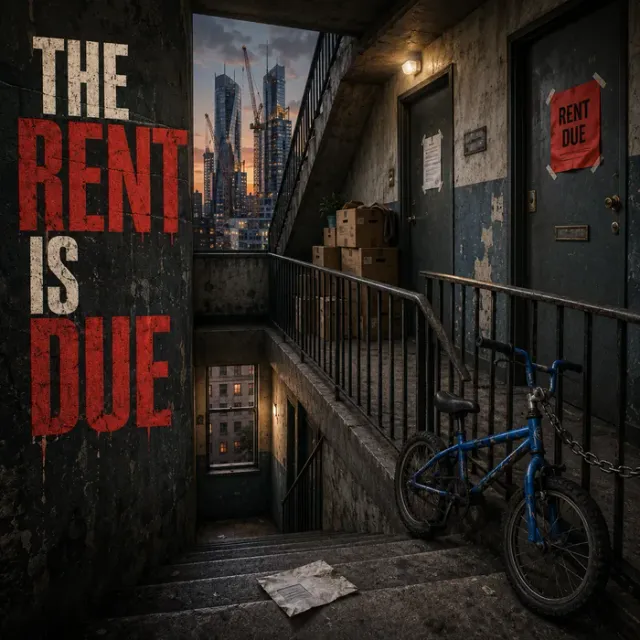
The Rent Is Due
The Rent Is Due turns housing crisis, rising rents and displacement into vivid conscious hip-hop, sharp storytelling and intense human drama across 14 tracks.

Saints of the Empty Hospital
Gothic metal follows exhausted care workers, lost patients, and a hospital system stretched beyond what its staff can carry.
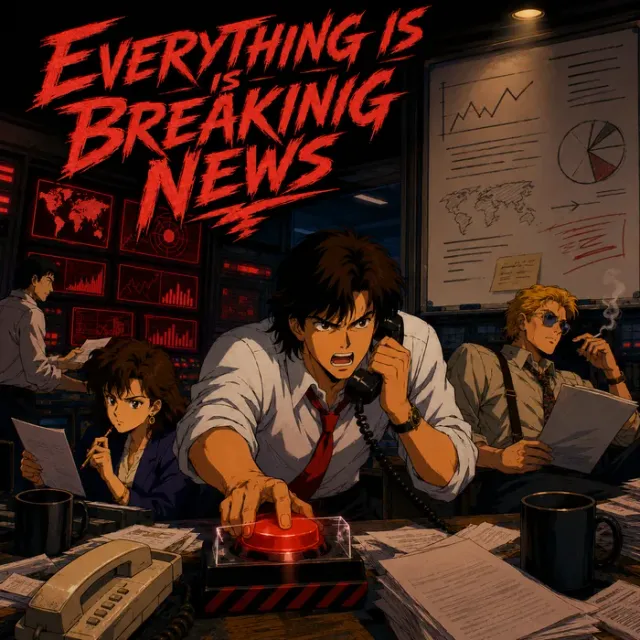
Everything Is Breaking News
Current's newsroom builds a faster breaking-news workflow and beats rival Blink. Then success makes red alerts routine. Classic metal meets deadline pressure.


