

The Scrum Master’s Last Stand
Made with generative AI; directed and curated by Daniel.
A progressive-metal sequel in which Sabine Wolf confronts executive metrics, protects her team, and cuts Project Phoenix down to something that works.
Tracklist
Liner Notes
A short editorial read on the album world, sound, and standout moments.
About the Album
The Scrum Master’s Last Stand begins after Sabine Wolf has won the argument and discovered that the company can survive the victory. Compulsory ceremonies are gone, dashboards no longer rank the staff, and the team finally has time to work. Management remains in place, however. Victor Sterling cannot remove Sabine without a fight, so he gives her Project Phoenix, a product that has already exhausted three teams. The promotion in responsibility is really a transfer of blame.
“After the Revolution” captures the unfamiliar quiet that follows. Keyboards replace status reports, and an empty whiteboard feels almost suspicious. “Project Phoenix” then brings the larger problem into view: too much scope, too many owners, and a release date that survived every change made to the plan. The conflict is less about agile rituals than the authority that used them.
The record works in progressive metal with a clear power-metal lift in the team choruses. Shifting meters and interrupted phrases give the meetings an unstable shape. Hard-rock riffs keep the exchanges direct, while brief funk accents loosen songs that might otherwise become uniformly severe. A five-note figure links the album. Four notes climb toward a resolution that keeps arriving late, much like the project itself.
“Freedom Pending Approval” shows Sabine receiving responsibility without the power to act. Every decision returns through another committee. “People Are Not Resources” answers with a broad group refrain, but its verses stay close to the work: support calls, hidden knowledge, overloaded specialists, and consequences assigned to people who did not approve the plan. The distinction between a team and a pool of capacity becomes the song’s real subject.
The first success is deliberately modest. On “The Sprint That Actually Worked,” the group finishes a useful feature and proves that a limited promise can be kept. “Success Has Entered the Meeting” immediately expands it. Executives and consultants rename the pilot, turn it into a framework, and attach new obligations to the same deadline. The arrangement grows busier as each visitor claims part of the result.
“One More Strategic Requirement” pushes Project Phoenix back toward collapse before Derek Flint arrives on “Derek from Transformation.” He brings a polished language of efficiency and a set of measurements designed to compare people who do different work. “Performance Retrospective” stages the review as a public trial. “Your Velocity Is Your Value” follows the predictable response: tickets are divided into smaller pieces, easy tasks move to the front, and difficult problems wait. The dashboard improves while the product gets worse.
The title track is Sabine’s refusal to accept another weekend of emergency work after management changed the scope without changing the date. Its power-metal chorus belongs to the whole team rather than a single heroic voice. They do not claim the project is easy or that every demand is unreasonable. They refuse to carry decisions made elsewhere as if those decisions were natural events.
“Read the Decisions Aloud” gives that refusal evidence. Sabine lists approval dates, scope changes, staffing cuts, and ignored warnings. The song strips the word “culture” away from failures with identifiable owners. Its tension comes from the record itself: each crisis has a sequence, and the sequence shows who chose what.
Resolution arrives through reduction. On “Small Enough to Work,” Project Phoenix becomes a focused system for payments, receipts, and audits rather than a platform expected to solve every problem in the company. The five-note motif finally settles because the promise has stopped moving. “No Promotion Necessary” closes with Victor offering Sabine the title of Vice President of Agile Excellence. She declines. Accepting would turn her resistance into another company program, so she returns to the team and the unfinished work.
Production Notes
All tracks were generated with AI music models, then processed for the final sound. No human performance recordings are used.
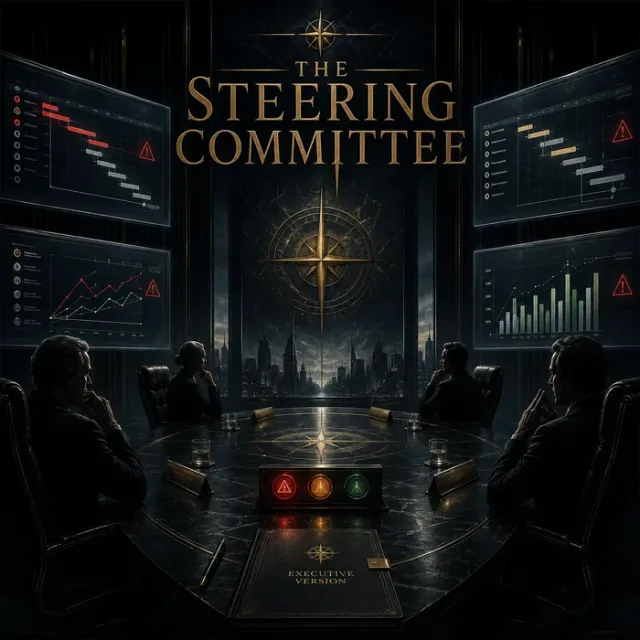
The Steering Committee
The Steering Committee turns corporate power games into progressive metal, exposing four leaders, four timelines and one project pushed toward collapse today.

Cloud Migration to Nowhere
Cloud Migration to Nowhere blends progressive metal, space rock and corporate satire into a sharp concept album about cloud costs, chaos and control at scale.
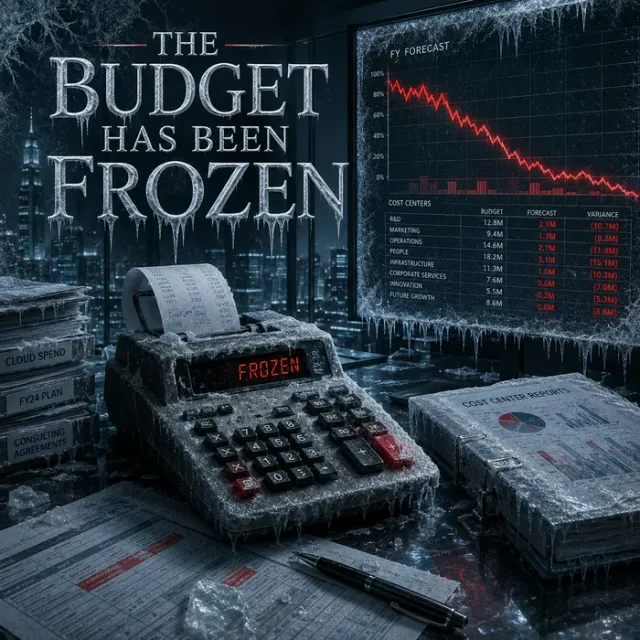
The Budget Has Been Frozen
A razor-sharp progressive rock and jazz metal concept album about frozen budgets, hidden costs, corporate hypocrisy and financial revolt in the modern office.

The Status Report Is Green
A sharp progressive rock satire on corporate denial, false green reports, shifting deadlines and one manager who finally tells the truth aloud before collapse.


Download the complete album
Get the full ZIP package with tagged audio files, cover artwork, and album metadata.
Help keep the albums coming
If this album was useful or fun to listen to, a small contribution helps cover hosting, tools, and new music experiments.