

The Scrum Master’s Revenge
Made with generative AI; directed and curated by Daniel.
A progressive power-metal satire about a Scrum Master watching agile practice harden into surveillance, ranking, and meetings that produce no work.
Tracklist
Liner Notes
A short editorial read on the album world, sound, and standout moments.
About the Album
Sabine Wolf joins Infinite Loop Solutions with a sincere belief in agile work. After a serious security incident, the company hires a consultancy to complete an organization-wide transformation in twelve weeks. Sabine expects the new process to bring development, QA, and operations into the same conversation. Instead, management turns every useful practice into another instrument for measuring the team.
The Scrum Master’s Revenge follows that change across fourteen linked songs. Progressive power metal suits the early optimism: Hammond organ, layered guitar harmonies, and large choruses give the transformation the air of an official campaign. Unease enters through a five-beat timer figure that first sounds like ordinary meeting punctuation. As the process hardens, the motif returns more often and leaves less room around it.
“Welcome to the Transformation” introduces Sabine before the language has gone sour. She wants shorter feedback loops, visible problems, and meetings where quieter colleagues can speak. “Fifteen Minutes Only” immediately tests those intentions. A concise stand-up grows into a two-hour recital of status updates, side arguments, and managerial questions. Clipped rhythms keep resetting the song before anyone can finish a thought.
“Story Points of No Return” finds the company assigning numbers to uncertainty, risk, and individual performance. The satire becomes sharper on “The Backlog Never Dies,” where finishing one ticket creates five more and urgent work disappears beneath presentation and approval. These songs do not blame the board or the method by itself. They show how a planning tool becomes harmful once its numbers are treated as proof rather than estimates.
Leon takes over “Priority Number One Again,” issuing incompatible demands with no responsibility for completing them. “Who Moved My Ticket?” plays like a short office mystery: an inconvenient issue vanishes because leaving it visible would damage the dashboard. The joke leads directly into “Velocity Is Mandatory.” Victor sees a team complete forty points and orders eighty for the next sprint. A rigid, martial pulse makes the arithmetic sound less like ambition than discipline.
The album’s central set piece is “Sprint Planning Eternity.” The meeting lasts fourteen hours, and the arrangement keeps losing its way through meter changes, time stamps, and overlapping voices. Sandwiches arrive. Daylight leaves the room. Cleaners pass the windows while the team continues estimating work that has not been defined. The track is funny at first, then deliberately tiring. It lets the ritual consume the same time the characters are supposed to protect.
“Blocked by Management” removes the ambiguity. Everyone knows where the delay sits, but no one is allowed to name it. “The Retrospective of Blame” then converts a meeting meant for reflection into a search for individual fault. By this point, terms such as trust, transparency, and accountability have become shields for the people least willing to be examined.
Sabine confronts her own part in the system on “Agile in Name Only.” The quieter arrangement gives her recognition some weight: she has used collaborative language to enforce decisions the team did not make. Her response begins with “No More Meetings About Meetings,” where developers, QA, and operations cancel rituals that consume time without improving the product. The resistance is collective, not a sudden act of individual heroism.
The title track delivers the expected power-metal scale while keeping the revenge practical. Sabine removes rankings, compulsory calendar events, output comparisons, and dashboard fields used to set employees against one another. The plastic “Impediment Remover” sword survives as a joke, but the decisive act is administrative: the team stops feeding a system that confuses control with progress.
“Build Something That Works” closes on a smaller victory. No presentation saves the company. The team repairs a real fault, replaces failing hardware, tests the change, and releases it. The five-beat timer returns as a calmer melody. Structure was never the enemy; the problem was a structure designed to monitor work instead of helping people do it.
Production Notes
All tracks were generated with AI music models, then processed for the final sound. No human performance recordings are used.
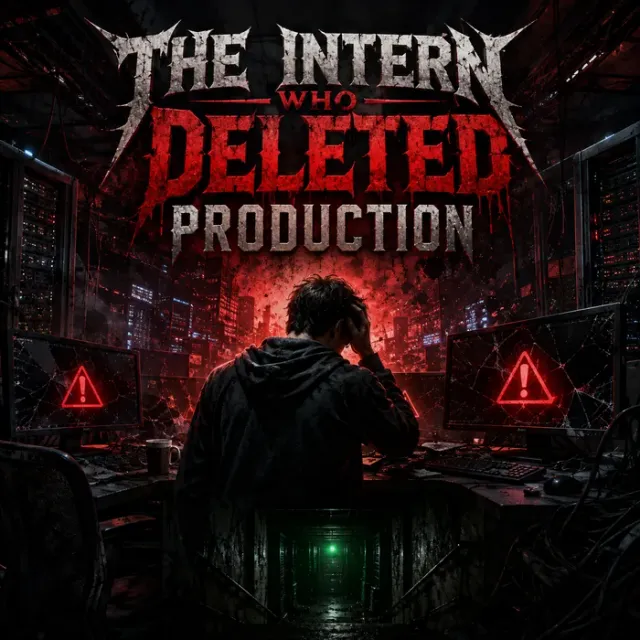
The Intern Who Deleted Production
The Intern Who Deleted Production is a savage comedy-thrash concept album about one fatal command and the broken company that made it inevitable from day one.
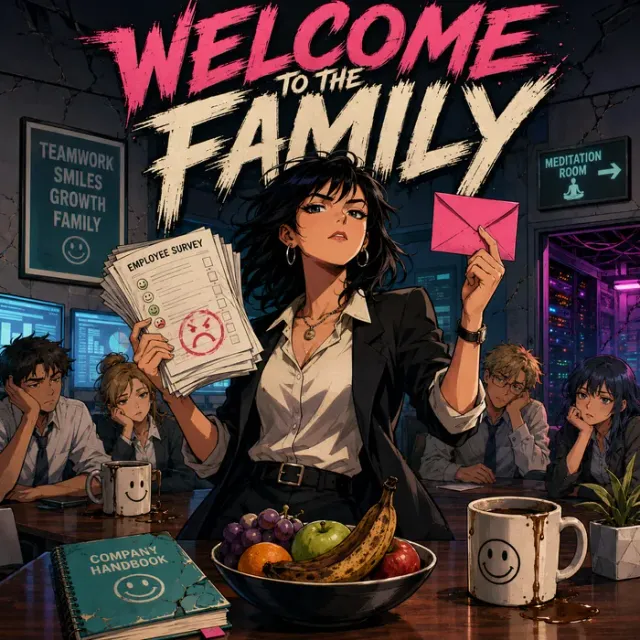
Welcome to the Family
Welcome to the Family turns corporate wellness, layoffs and hollow culture slogans into biting alternative rock, pop-punk satire and protest with sharp teeth.
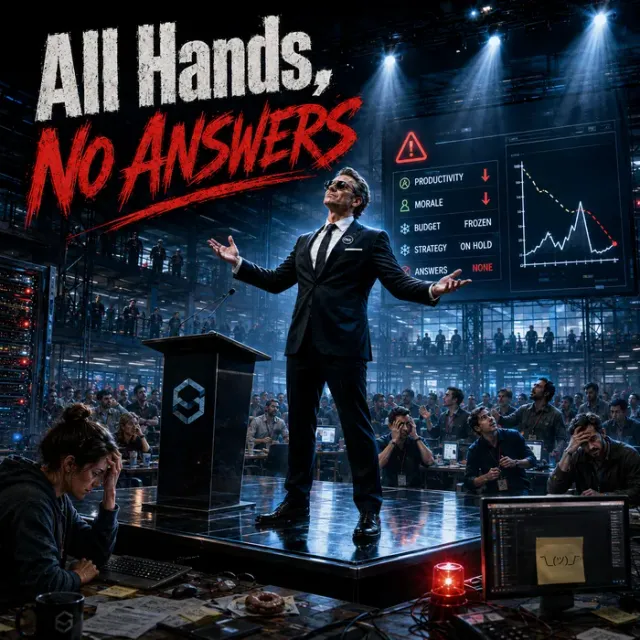
All Hands, No Answers
A theatrical comedy arena-metal rock opera about corporate spin, broken systems, filtered truth and a CEO discovering the crisis beneath the stage lights now.
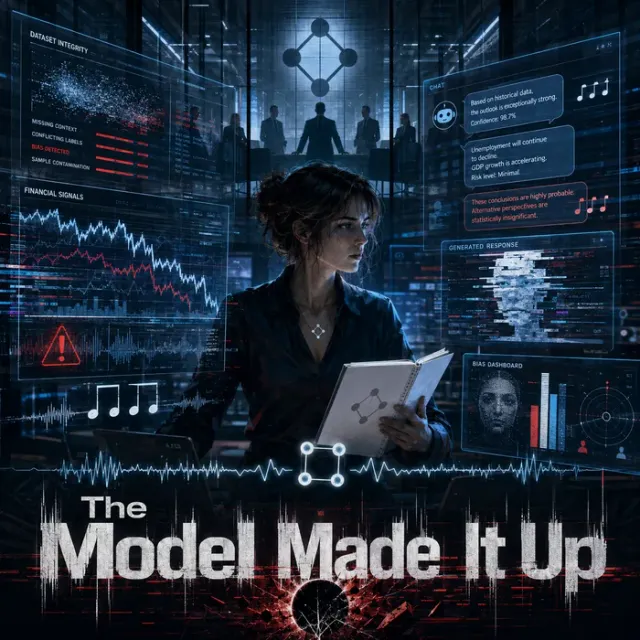
The Model Made It Up
A biting progressive electronic metal concept album about AI hype, bad data, corporate ambition, hallucinations, bias and the fight for human control at work.


Download the complete album
Get the full ZIP package with tagged audio files, cover artwork, and album metadata.
Help keep the albums coming
If this album was useful or fun to listen to, a small contribution helps cover hosting, tools, and new music experiments.