

The Status Report Is Green
Made with generative AI; directed and curated by Daniel.
A sharp progressive rock satire on corporate denial, false green reports, shifting deadlines and one manager who finally tells the truth aloud before collapse.
Tracklist
14 tracks
Liner Notes
A short editorial read on the album world, sound, and standout moments.
About the Album
The Status Report Is Green turns the rituals of project management into a sharply observed progressive rock satire about numbers that refuse to behave, deadlines that move without officially changing and executives who fear a red PowerPoint box more than a failing system.
Set inside the fictional software company Infinite Loop Solutions, the album follows experienced project manager Irene Walsh as she takes charge of a newly established Project Management Office. She enters the role believing in the practical value of clear schedules, visible dependencies and honest risk reporting. Her task sounds straightforward: introduce standards, restore control and prevent future projects from drifting into chaos. What she discovers instead is a workplace where transparency is welcomed only as long as it confirms what senior management already wants to hear.
At the centre of the story is Project Phoenix, an increasingly unstable programme whose technical condition deteriorates while its official status remains reassuringly green. Tests fail, contracts remain unsigned, responsibilities are left unclaimed and a supposedly finished task remains fixed at ninety percent for months. None of this is permitted to disturb the appearance of progress. Milestones are quietly relocated, critical risks receive friendlier names and reports are shortened until every important warning has vanished from the page.
That premise could easily have produced a collection of simple office jokes. Instead, The Status Report Is Green treats its subject with the seriousness of a genuine concept album. The humour is dry, specific and rooted in recognisable behaviour: the manager who calls a delay a “sequencing refinement,” the committee that averages several warning colours until the overall result appears harmless, and the meeting that spends more time discussing the meaning of red than the danger it represents. The satire works because the album understands the language it is mocking.
Musically, the record is built around progressive rock, with Comedy Metal weight, Jazz Rock precision and flashes of hard rock confrontation. Angular guitar figures, Hammond-style organ, active bass lines and tightly controlled drums mirror the complicated machinery of corporate planning. Shifting time signatures are not used as decoration. They represent dependencies, rewritten schedules and processes that repeatedly stop one beat before they should resolve.
A recurring five-note motif runs through the album. Its final note arrives late, echoing a milestone that never lands when promised. In the opening track, “Welcome to the PMO,” the figure sounds organised and optimistic. As the story develops, it is interrupted, stretched and passed between instruments. During “Dependency on Everything,” the motif becomes trapped inside a chain of rhythmic delays. Only in the finale, “Red Means Red,” does it finally resolve on time.
The album’s early chapters introduce Infinite Loop Solutions through the vocabulary of plans, charts and status meetings. “The Status Report Is Green” establishes the central contradiction with one of the record’s strongest hooks: the facts may be rough, but the font remains clean. “Ninety Percent Complete” turns an immortal progress figure into a patient, darkly comic groove, while “Move the Milestone” shows how language can preserve the illusion of an unchanged deadline even as delivery slips from one quarter into the next.
The arrangements become increasingly unstable as the deception deepens. “Risk Reclassified” transforms a critical technical threat into a sequence of polished euphemisms. “Dependency on Everything” uses interlocking vocal lines and asymmetrical rhythms to create the feeling of an entire organisation waiting for somebody else to act. “The Gantt Chart Prophecy” gives the project schedule its own voice, presenting a vast planning document as an oracle forced to predict a future built from outdated assumptions.
The mid-album climax, “Executive Summary,” is especially effective. Irene submits a detailed and honest assessment, only to watch it shrink as each uncomfortable fact is deleted or softened. The music follows the editing process: layers disappear, the arrangement becomes smoother and the underlying harmony grows more unsettling. What remains is concise, attractive and almost entirely useless.
From that point onward, the album’s comedy develops a harder edge. Irene is ordered to allow “No Red on the Slide,” restores the original facts in “Publish the Real Plan” and creates a direct conflict between “Two Versions of Progress.” One report protects the monthly score. The other describes the system that engineers are actually expected to release.
“The Meeting About the Color” captures the project’s institutional absurdity at its purest. Directors debate shades, terminology and visual consistency while the risk of service failure waits unanswered. The track is funny, but its humour carries a genuine sense of frustration. The people in the room are not unable to understand the problem. They are choosing to discuss something safer.
That choice leads directly into “Red Means Red,” the album’s decisive finale. Irene does not deliver a heroic speech about defeating the system. She does something more difficult and more useful: she refuses to alter the meaning of the evidence. The engineers begin to support her, the official narrative starts to fracture and Project Phoenix is finally described as it is. The project is not magically repaired, but the organisation can no longer claim that nobody knew.
The epilogue, “Green Pending Recovery,” provides a perfectly cynical final note. Management invents a new category that sounds reassuring enough for the next report, yet some practical improvements have begun. Risks now have owners, incomplete tasks are measured honestly and Irene’s unmodified document remains attached to the record. Corporate language survives, but so does the truth.
The Status Report Is Green is recommended if you like political punk, post-punk, protest rock, anti-authoritarian lyrics, dystopian concept albums and AI-assisted music projects. Its setting may be a software company rather than a parliament or police state, but its deeper subject is familiar: institutions protecting their own stories, language being used to avoid responsibility and one person deciding that professional loyalty does not require dishonesty.
This is an album for anyone who has watched a bad decision become an approved strategy, attended a meeting where presentation mattered more than substance or received a confident update from a project already burning behind the chart. Its progressive arrangements reward close listening, its choruses remain immediate, and its story becomes more pointed with every renamed risk. Beneath the green indicators, polished summaries and carefully aligned arrows, the record asks a simple question: what is a status report worth when everyone knows it is lying?
Production Notes
All tracks were generated with AI music models, then processed for the final sound. No human performance recordings are used.
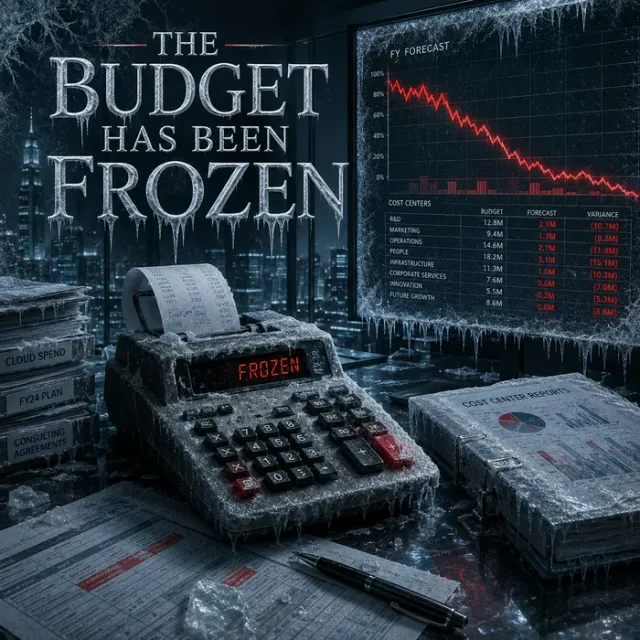
The Budget Has Been Frozen
A razor-sharp progressive rock and jazz metal concept album about frozen budgets, hidden costs, corporate hypocrisy and financial revolt in the modern office.
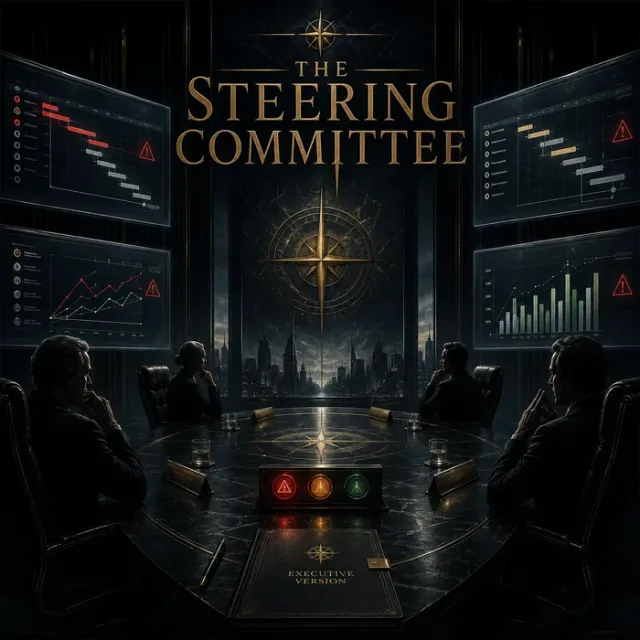
The Steering Committee
The Steering Committee turns corporate power games into progressive metal, exposing four leaders, four timelines and one project pushed toward collapse today.
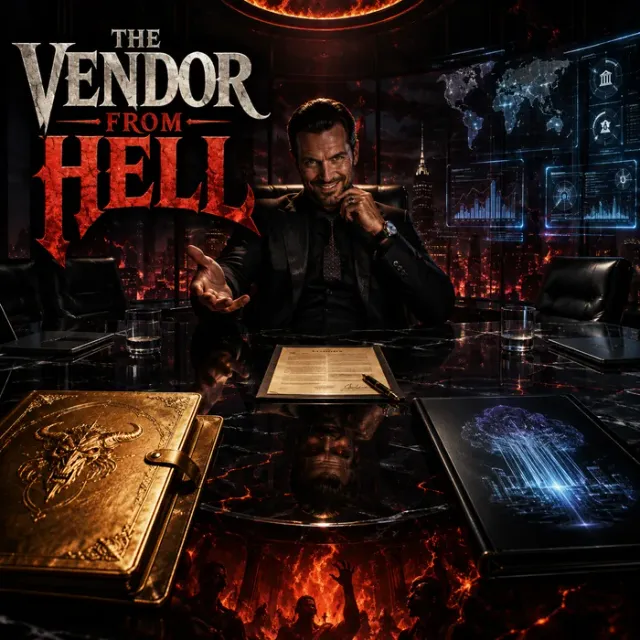
The Vendor from Hell
The Vendor from Hell turns software sales, vendor lock-in and broken support promises into a fierce blues-rock and heavy-metal rebellion inside the boardroom.
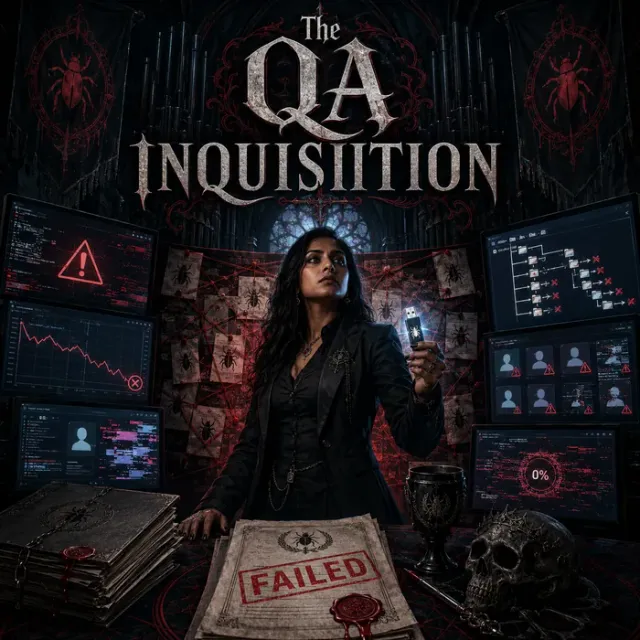
The QA Inquisition
The QA Inquisition is a gothic metal concept album about buried bugs, corporate denial and the high cost of ignoring warnings before a major software release.


Download the complete album
Get the full ZIP package with tagged audio files, cover artwork, and album metadata.
Help keep the albums coming
If this album was useful or fun to listen to, a small contribution helps cover hosting, tools, and new music experiments.