

The Steering Committee
Made with generative AI; directed and curated by Daniel.
The Steering Committee turns corporate power games into progressive metal, exposing four leaders, four timelines and one project pushed toward collapse today.
Tracklist
14 tracks
Liner Notes
A short editorial read on the album world, sound, and standout moments.
About the Album
The Steering Committee is where corporate governance stops being a management tool and becomes a stage for power, vanity and distributed blame. Set inside Infinite Loop Solutions, the album follows four Directors who are supposed to guide Project Phoenix toward completion. Instead, Marcus Vale, Elaine Brooks, Robert Kane and Claudia Stern turn each meeting into a struggle over budget, influence and control of the story. Nobody wants to lose authority, yet nobody wants their name attached to failure. That contradiction gives the record its satire and tension.
Musically, the album is built on progressive metal and symphonic rock, but it never treats complexity as decoration. Odd meters and transitions and competing motifs mirror the layers of approval, postponed decisions and shifting alliances. Seven-string guitars supply weight, while piano, brass, strings and Hammond organ give the meetings ceremonial grandeur. The production remains clear and disciplined: the bass stays articulate, the drums retain dynamics, and the vocals sit firmly at the centre so every accusation, euphemism and evasive phrase can be understood.
The opening track, “Welcome to Governance,” introduces the oval table, gold nameplates and the promise that one more committee will solve every coordination problem. Its brass and measured riffs sound confident, but the unresolved four-note motif suggests that the structure is unstable. “Four Directors, No Decision” gives each executive an identity. Marcus demands technical quality without moving the deadline. Elaine expands the product without admitting that the scope has changed. Robert warns about operational risk while resisting prevention costs. Claudia turns every setback into a transformation success story.
From there, the album tightens its grip. “Take It Offline” turns a corporate phrase into a ruthless chorus about removing difficult questions from the official record. “The Executive Version” is sung from the perspective of the sanitized presentation itself, where failed tests become “learning,” delays become “progress,” and uncomfortable evidence becomes harmless language. “Red, Amber, Green” uses a mechanical groove to show how risk ratings can be negotiated until every warning light looks reassuring. These songs are funny because the details are recognizable, but the humour never weakens the stakes. Behind each slide are exhausted teams, fragile systems and decisions with consequences.
The record’s central sequence is strong. “Who Owns the Outcome?” attacks the gap between authority and responsibility, while “Strategic Alignment Pending” slows the pace and lets the cost of indecision settle in. By the time the title track arrives, the album has earned its large-scale arrangement. “The Steering Committee” is a multi-part confrontation in which the Directors’ separate themes collide, Priya’s QA warning is pushed into the appendix, and the meeting breaks apart under its own contradictions. It is progressive metal used as narrative architecture: shifting meters are not there to impress, but to make confusion, obstruction and rivalry audible.
The aftermath is colder. “Remove the QA Slide” gives Priya one of the album’s direct performances. Her evidence has been deleted, yet the defect remains, and the song refuses to turn her resistance into a vague empowerment anthem. She has timestamps, test results and a backup copy. “Four Versions of Tomorrow” follows with the album’s most damaging revelation: during a customer presentation, four incompatible timelines appear on the same screen. The musical parts pull toward different harmonic centres before collapsing into one blunt question—when will the system actually work?
Claudia’s response, “Productive Strategic Tension,” is one of the sharpest pieces of writing on the record. She tries to rename open failure as healthy organizational friction, but every repetition of the phrase loses authority. The customer cuts through the performance in “One Person Responsible,” demanding a single accountable name. The arrangement becomes simpler and heavier, stripping away the structures that protected the Directors. Their silence says more than another chorus of corporate language could.
That silence makes “The Team Takes the Screen” satisfying without turning it into an easy victory. Mara, Priya, Daniel and Sabine do not save Project Phoenix through inspiration or heroic speeches. They present one scope, one tested plan, one staffing reality and one achievable date. The recurring four-note motif finally resolves because the work and the authority are forced into the same frame. It is the album’s release of tension, but not a fantasy about management becoming wise.
The closing track, “The Governance Board,” restores the irony. Project Phoenix survives, the Directors rewrite the recovery as a leadership success, and a new oversight body is created to prevent future communication problems. Then a fresh folder appears: Cloud Migration Strategy. The final unresolved note makes the joke land and points directly toward the next corporate disaster.
The Steering Committee is recommended for listeners who enjoy concept albums with strong characters, recurring musical ideas and satire rooted in specific workplace behaviour rather than generic office jokes. Recommended if you like: Political punk, post-punk, protest rock, anti-authoritarian lyrics, dystopian concept albums and AI-assisted music projects. Its musical core remains firmly progressive metal, with symphonic and art-rock detail. The shared attraction is resistance to systems that protect power by hiding responsibility.
This album is worth hearing because it understands that bureaucracy can be dramatic. A changed adjective can conceal a failed release. A removed slide can endanger a customer. A meeting can become a battlefield without anyone raising their voice. The Steering Committee turns those quiet conflicts into heavy riffs, precise hooks and a story that keeps escalating until the polished version of events can no longer survive the screen.
Production Notes
All tracks were generated with AI music models, then processed for the final sound. No human performance recordings are used.
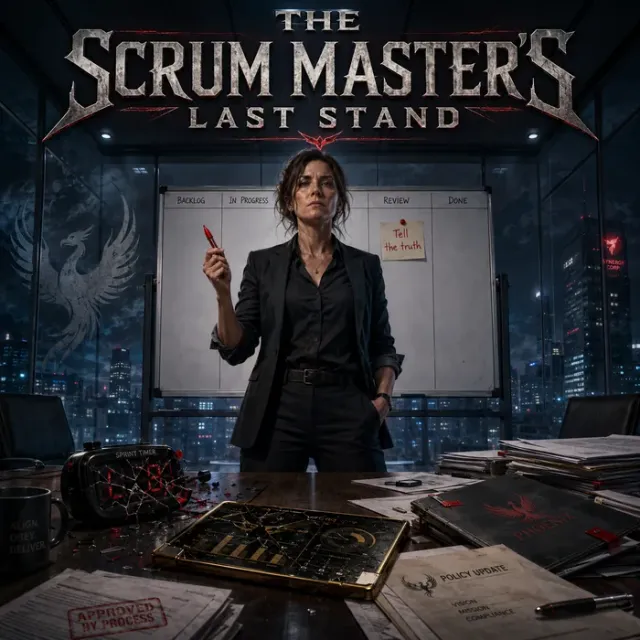
The Scrum Master’s Last Stand
A progressive-metal sequel in which Sabine Wolf confronts executive metrics, protects her team, and cuts Project Phoenix down to something that works.
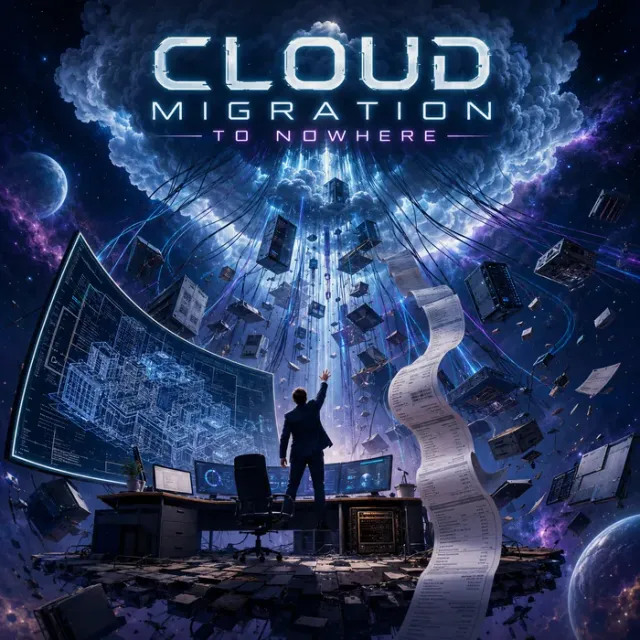
Cloud Migration to Nowhere
Cloud Migration to Nowhere blends progressive metal, space rock and corporate satire into a sharp concept album about cloud costs, chaos and control at scale.
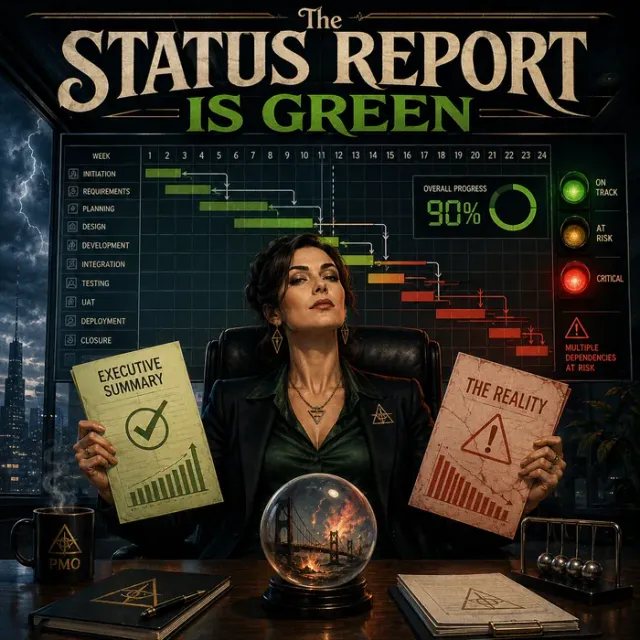
The Status Report Is Green
A sharp progressive rock satire on corporate denial, false green reports, shifting deadlines and one manager who finally tells the truth aloud before collapse.
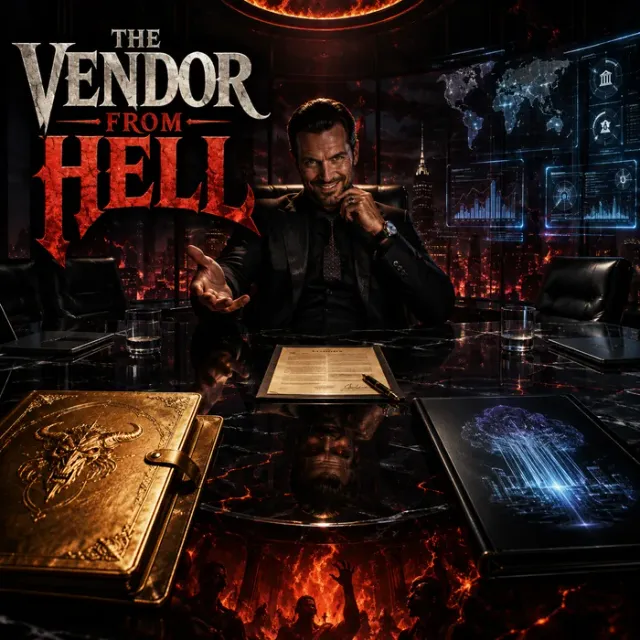
The Vendor from Hell
The Vendor from Hell turns software sales, vendor lock-in and broken support promises into a fierce blues-rock and heavy-metal rebellion inside the boardroom.


Download the complete album
Get the full ZIP package with tagged audio files, cover artwork, and album metadata.
Help keep the albums coming
If this album was useful or fun to listen to, a small contribution helps cover hosting, tools, and new music experiments.