

The Vendor from Hell
Made with generative AI; directed and curated by Daniel.
The Vendor from Hell turns software sales, vendor lock-in and broken support promises into a fierce blues-rock and heavy-metal rebellion inside the boardroom.
Tracklist
14 tracks
Liner Notes
A short editorial read on the album world, sound, and standout moments.
About the Album
The Vendor from Hell arrives with a handshake, a polished demo and a contract thick enough to stop a door. Behind that familiar corporate ritual, Melody Mind Music has built a sharply observed blues-rock and heavy-metal concept album about software promises, license traps and the moment a company realizes that its expensive new future is built on the same old machinery.
Set between Return of the Legacy System and The Intern Who Deleted Production, the album follows Infinite Loop Solutions after management decides that one central platform will solve everything. OmniCore Global’s UnitySphere Enterprise is sold as the answer to accounting, project management, customer support, human resources and almost every other function that can fit into a presentation slide. Maxwell Price, the vendor’s immaculate salesman, knows how to make the impossible sound routine. During “The Perfect Demo,” every report loads instantly and every awkward question can be pushed to a later meeting. By “Fully Supported,” his favorite phrase has become both a hook and a warning.
The album’s humor works because its targets are recognizable, not because the songs collapse into novelty. The jokes come from prepared demo data, expiring quarter-end discounts, 300 pages of license conditions, unavailable export functions and support tickets closed by automation while the problem remains untouched. Anyone who has sat through a vendor presentation or discovered that a basic feature belongs to a more expensive tier will recognize the language immediately.
Musically, the record gives that language weight. The core sound is rooted in blues rock, but its swagger is hardened by heavy-metal riffs, muscular hard-rock drums and Southern-rock confidence. Slide guitar follows Maxwell like a calling card: smooth, persuasive and slightly dangerous. Hammond organ gives the boardroom scenes a warm, expensive glow, while low-tuned guitars expose what sits beneath the sales pitch. The rhythm section moves from boogie-driven pressure to slower, heavier grooves as the contract tightens around the company.
The early run is deliberately seductive. “Sign Before the Quarter Ends” turns manufactured urgency into a fast, rolling sales anthem, while “Not Included in Your Plan” changes the mood with locked menus and greyed-out buttons. “That Requires Enterprise Plus” lands one of the album’s strongest choruses, turning the endless staircase of software tiers into a blunt, memorable refrain. The track is satirical, but the arrangement keeps it from feeling lightweight: the guitars hit hard and the hook carries real frustration.
The middle of the album is where the comedy begins to bruise. “Please Contact Sales” follows Ben through a support system more interested in upselling him than repairing a critical defect. “Ticket Automatically Resolved” is darker and more mechanical, showing how a broken process can still produce excellent performance metrics. The centerpiece, “Professional Services Day,” becomes a slow, grinding invoice nightmare in which every checkbox requires discovery, alignment, documentation and another paid workshop. The music makes the bureaucracy feel physically heavy.
From there, the story turns toward dependency. “Your Data Lives Here Now” is not merely about a bad product; it is about ownership without control. The company technically owns its information, yet cannot retrieve it in a usable format. “Renewal Day” sharpens the trap with price increases and retired contract models, while “The Legacy Beneath the Logo” delivers the central revelation: UnitySphere’s modern surface rests on technology disturbingly similar to The Beast, the obsolete system the company believed it had escaped.
That discovery gives the final act its momentum. “Build the Exporter” is the sound of competence pushing back against sales theater. Mara, Priya, Klaus and Ben stop waiting for permission and create their own route out. The driving groove and collective vocals turn technical work into a credible act of rebellion. There are no magical fixes here, only long nights, careful mapping, checksum comparisons and the determination to preserve every record correctly.
“License to Leave” delivers the album’s largest release. The victory is not simply cancelling a contract; it is recovering the ability to decide. Victor finally signs the termination notice after being confronted with the known defect, the closed support case and the evidence that his team has rescued the data. The closing track, “Twenty Percent Off Forever,” refuses an easy triumph. Maxwell returns with a discount, a free strategy workshop and the same polished confidence that started the story. For a moment, Victor nearly reaches for the folder again. The team stops him.
That ending is what makes The Vendor from Hell more than a sequence of corporate punchlines. It understands that vendor lock-in is not maintained only by technology. It survives through sunk costs, institutional embarrassment, fear of disruption and the temptation to make one more compromise rather than admit the original decision was wrong. Maxwell works because he is not a supernatural monster. He is simply very good at selling dependency as partnership.
The album is recommendable because it combines a coherent story with songs that still work outside the narrative. The choruses are direct, the recurring musical motifs reward a full-album listen and the production gives each chapter its own character without losing the central blues-rock and metal identity. It can be heard as workplace satire, as a protest record about corporate power or simply as a collection of heavy, hook-driven songs about people refusing to surrender control of their own work.
Recommended if you like: Political punk, post-punk, protest rock, anti-authoritarian lyrics, dystopian concept albums, AI-assisted music projects.
The Vendor from Hell is for listeners who enjoy concept albums with clear characters, escalating consequences and a finale that earns its release. It is sharp without becoming smug, technical without becoming inaccessible and funny without weakening the anger underneath. Press play for Maxwell Price’s perfect demonstration. Stay for the moment the team finally takes the contract out of Victor’s hands.
Production Notes
All tracks were generated with AI music models, then processed for the final sound. No human performance recordings are used.
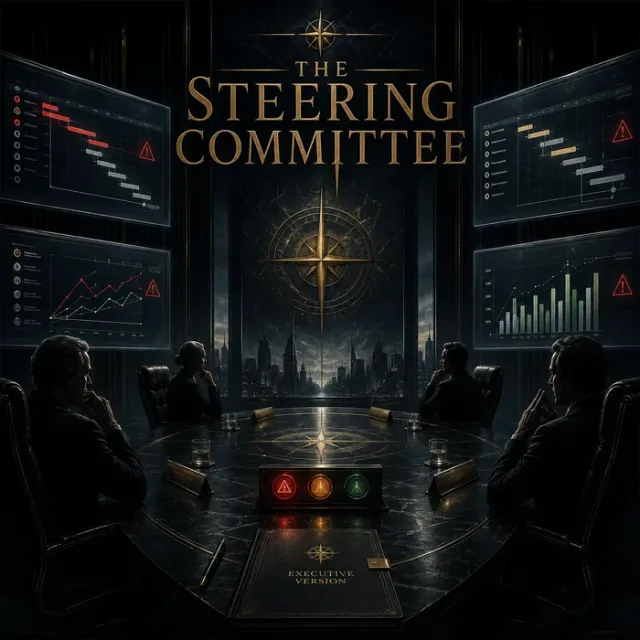
The Steering Committee
The Steering Committee turns corporate power games into progressive metal, exposing four leaders, four timelines and one project pushed toward collapse today.
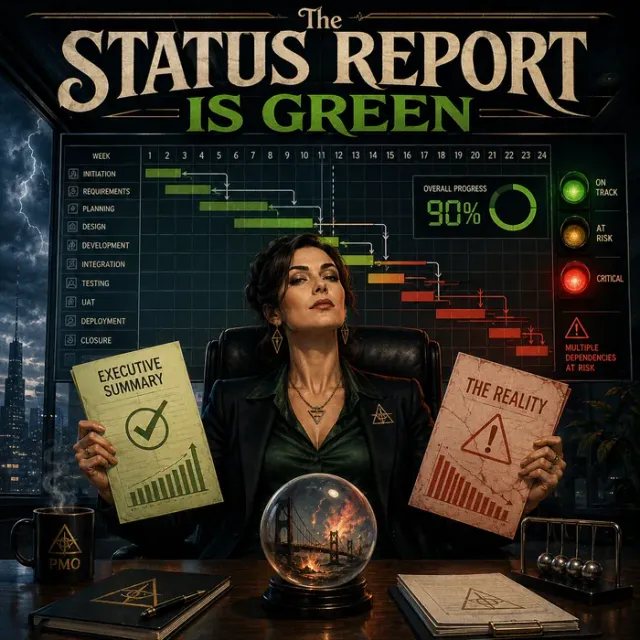
The Status Report Is Green
A sharp progressive rock satire on corporate denial, false green reports, shifting deadlines and one manager who finally tells the truth aloud before collapse.
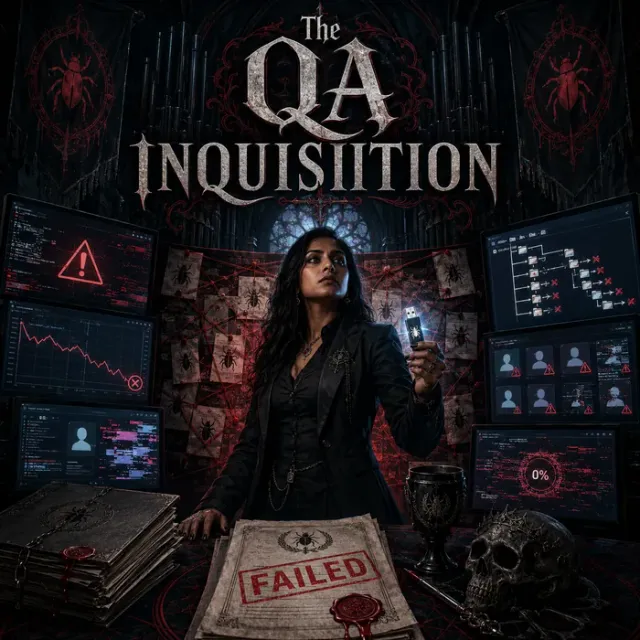
The QA Inquisition
The QA Inquisition is a gothic metal concept album about buried bugs, corporate denial and the high cost of ignoring warnings before a major software release.
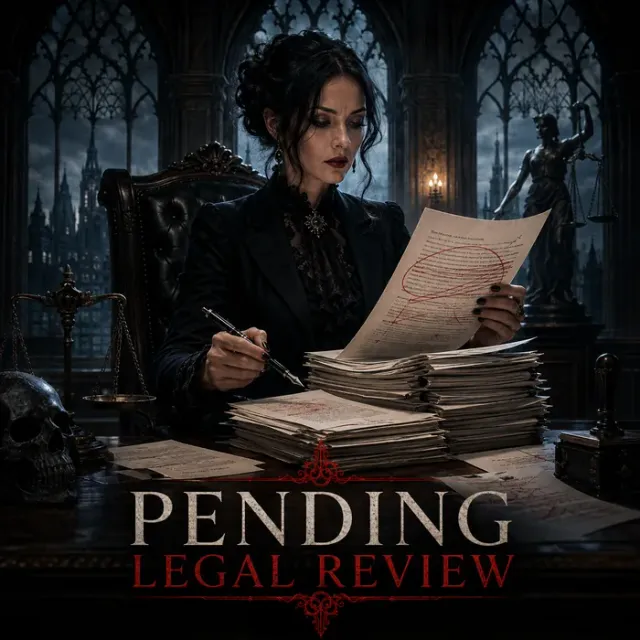
Pending Legal Review
Pending Legal Review is a gothic rock and doom metal concept album about contracts, liability, legal pressure, red lines and the hidden risk of signing blind.


Download the complete album
Get the full ZIP package with tagged audio files, cover artwork, and album metadata.
Help keep the albums coming
If this album was useful or fun to listen to, a small contribution helps cover hosting, tools, and new music experiments.