
NWOBHM
The Witchfinder’s Ledger
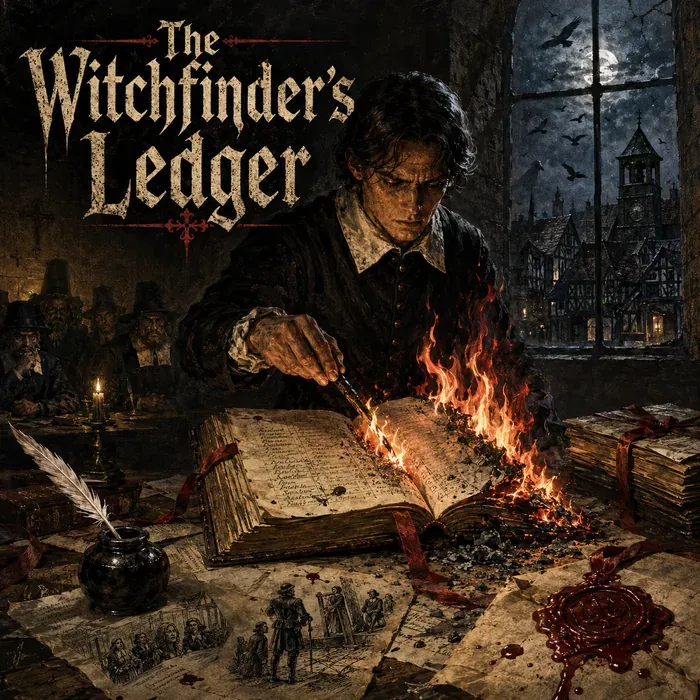
The Witchfinder’s Ledger is a dark NWOBHM concept album about fear, false justice and resistance, driven by galloping riffs and dramatic storytelling.
Liner Notes
A short editorial read on the album world, sound, and standout moments.
About the Album
The Witchfinder’s Ledger is not an album about magic. It is an album about paperwork, fear, and the terrifying ease with which ordinary people can turn suspicion into policy. Framed as a fourteen-song Heavy Metal and NWOBHM narrative, it follows a young court clerk assigned to document a series of witch trials in a European town. At first, he trusts the machinery around him: the judge, the seal, the testimony, the columns of names. By the time he understands what the ledger truly records, his handwriting has helped destroy lives.
That choice of viewpoint gives the album its edge. Rather than placing a heroic outsider at the center, The Witchfinder’s Ledger stays close to a man who begins inside the institution and benefits from its order. He is neither innocent observer nor rebel. He writes what powerful men require, dismisses doubts, and learns how easily a contradiction can be cleaned up when it reaches an official page. The story becomes less about discovering a conspiracy than recognizing complicity: the clerk realizes that the system does not malfunction when it condemns the innocent. It functions exactly as intended.
Musically, the record draws on the storytelling and forward motion of NWOBHM without reducing the period to costume or nostalgia. Galloping bass lines, twin-guitar harmonies, dry drums, sharp melodic leads, and forceful clean vocals give the songs an early-eighties metal backbone. Yet the album avoids becoming a sequence of interchangeable charges. “Under the Court Seal” opens with ceremonial confidence; “Tongues Behind the Timber” moves in a 6/8 pulse that turns gossip into communal rhythm; “Widow at the Bar” slows the pace and gives the accused woman room to answer in her voice. The result feels coherent, but never static.
The title track is effective because it treats the ledger as more than a prop. In “The Witchfinder’s Ledger,” the book becomes a witness to the hands that fill it. Its columns look neutral, its bindings seem harmless, yet its order gives rumours the appearance of fact. This is the album’s argument: violence does not always arrive shouting. Sometimes it arrives numbered, witnessed, stamped, and tied with a red cord. The recurring images of wax, ink, bells, ash, damp stone, and timber roofs keep the world tangible, while the three-note guitar motif works like a seal pressed into each chapter.
The middle of the album tightens the moral trap. “Wax on Her Letter” turns a fingerprint in candle wax into something more persuasive than any testimony. “Bells for the Innocent” provides the central climax, as a mass sentence and execution expose the link between accusation and property. The victims’ homes, fields, tools, and debts have been divided before judgment is complete. What seemed like religious panic is revealed as an economy, with fear providing the language and confiscation providing the reward.
From there, the album becomes darker because the clerk can no longer pretend not to know. “Ash Upon the Market” follows the executions with an auction, showing townspeople purchasing the possessions of neighbours they watched die. “A Cell Without a Psalm” is the record’s low point: the clerk promises to preserve a prisoner’s words, then writes a false confession after the man dies. The scene works because it refuses the comfort of blaming judges or witchfinders. No one guides his hand. He chooses the lie, and the album makes him live with that choice.
That honesty gives the act its weight. When resistance comes, it is not presented as instant redemption. “Cut the Crimson Cord” makes clear that remorse without action can become a form of self-protection. In “Burn the Ledger,” the clerk destroys the register and the arrest lists, but not the town, the courthouse, or the evidence elsewhere. The distinction matters. This is not an arson fantasy or an easy purification by flame. It is an attempt to break one instrument of persecution, undertaken by someone who knows that the dead will not return and his guilt will not disappear.
The finale refuses victory. The court interprets the burning as proof against him, showing how an authoritarian system can absorb even resistance into its logic. “The Last Blank Line” then moves years forward, where an apprentice discovers surviving evidence and an unfinished record. The conclusion offers no sweeping reform, only a meaningful refusal: a line prepared for another name remains empty. After an album filled with forced confessions and manufactured certainty, that blank space carries power.
The Witchfinder’s Ledger is recommended if you like political punk, post-punk, protest rock, anti-authoritarian lyrics, dystopian concept albums, or AI-assisted music projects that treat the technology as a tool rather than the subject. Its sound is traditional heavy metal, but its concerns are painfully modern: institutional language, moral cowardice, profitable panic, public complicity, and the danger of allowing records to replace reality.
This is an album worth hearing from beginning to end, not merely for its riffs or historical setting, but for the way every musical return changes meaning. The bells begin as symbols of order and end as witnesses. The red ribbon begins as official decoration and ends as a restraint to be cut. The ledger begins as proof and ends as an accusation against everyone who helped fill it. The Witchfinder’s Ledger does not ask whether monsters existed in the town. It asks who needed them to exist, who wrote their names down, and who was willing to leave the next line blank.
Production Notes
All tracks were generated with AI music models, then processed for the final orchestral sound. No human performance recordings are used.
Full album download
Download the complete album
Get the full ZIP package with tagged audio files, cover artwork, and album metadata.
Support MelodyMind
Help keep the albums coming
If this album was useful or fun to listen to, a small contribution helps cover hosting, tools, and new music experiments.
Join the conversation
Reactions from the web
Mentions, likes, reposts, and replies from IndieWeb and Fediverse-friendly sites can appear here after you allow community features.
The Architecture of Collapse
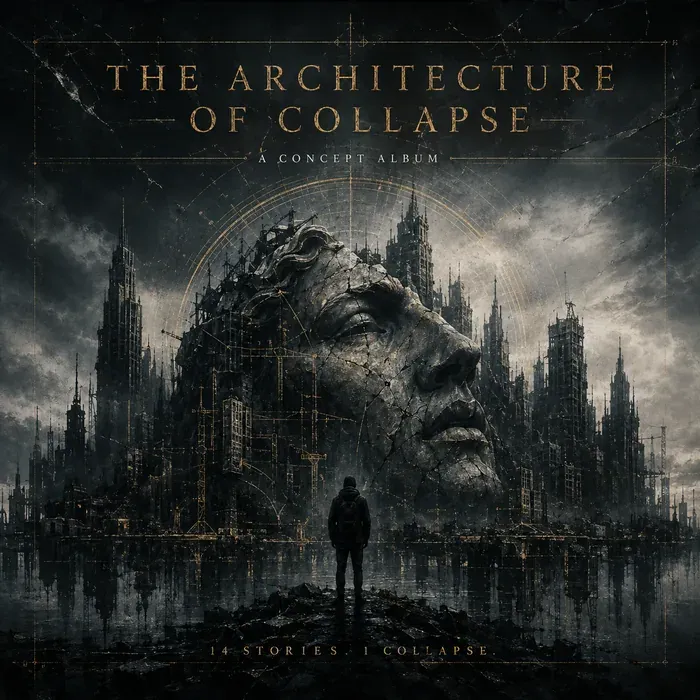
The Architecture of Collapse is a dark symphonic metal opera about broken systems, burnout, rage, and one developer losing himself inside the machine at work.
The Ash Tree Remembers
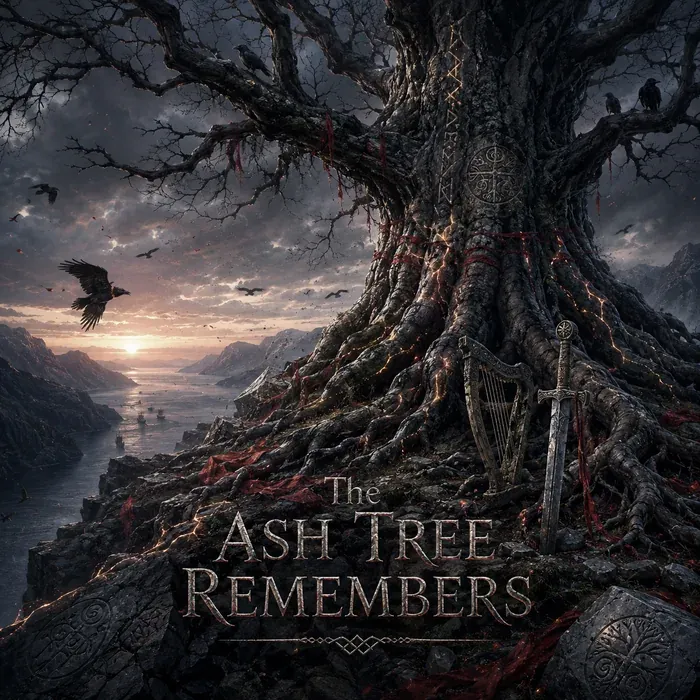
The Ash Tree Remembers is an epic Viking metal journey through Yggdrasil, war, memory, death and renewal, told through crushing riffs and Nordic ritual fires.
The Blood Moon Saga
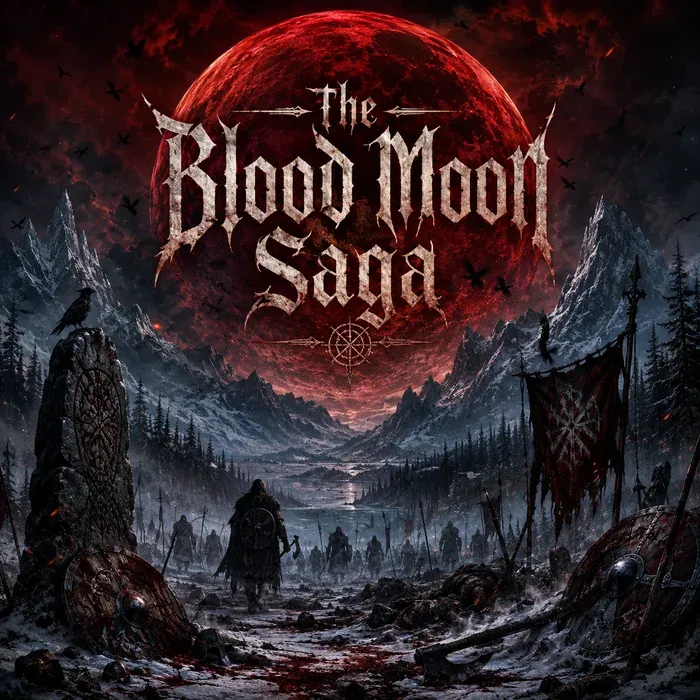
The Blood Moon Saga is a dark Viking metal concept album of blood feud, prophecy, ritual war, tragic revelation, and apocalyptic Nordic atmosphere.
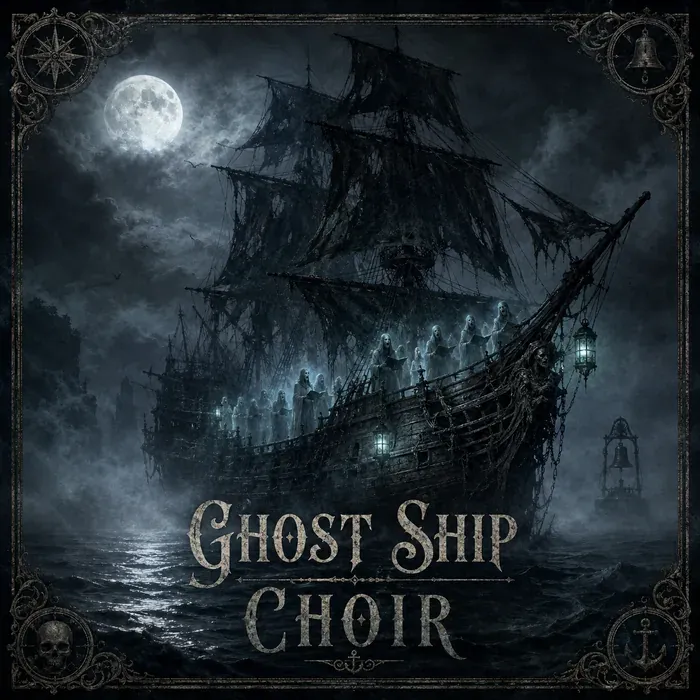
Ghost Ship Choir
Ghost Ship Choir is a haunted dark sea shanty album of fog, cursed sailors, gothic folk choirs, black sails, ocean dread and fragile redemption at dawn... ...
Community
Comments ...
Read or leave a comment about this album. Comments are provided by Cusdis and load only after you allow the comments feature.
Enable comments to load the discussion from Cusdis.