

Thunder Doesn’t Pay the Rent
Made with generative AI; directed and curated by Daniel.
Thunder Doesn’t Pay the Rent turns Zeus’s midlife crisis into biting blues rock, where unpaid bills, bruised pride, black humor and hard-won humility collide.
Tracklist
14 tracks
Liner Notes
A short editorial read on the album world, sound, and standout moments.
About the Album
Thunder Doesn’t Pay the Rent begins with a joke strong enough to carry an entire record: Zeus, once ruler of Olympus, now lives in a leaking attic above a laundromat and cannot understand why thunder no longer counts as authority. The premise is comic, but the album moves beyond the gag. Across fourteen songs, the fallen god becomes less a mythological caricature than a recognizable man: aging, estranged, broke, proud, and forced to discover that power is not the same thing as purpose.
Musically, the album occupies a weather-beaten corner of classic rock, blues rock, folk rock, and theatrical pub rock. Its world is built from overdriven guitars, twelve-string acoustics, Hammond organ, tom-heavy live drums, and a recurring three-note thunder motif that changes meaning as the story develops. Early on, the riff feels like a warning. Later, it sounds like memory. By the final tracks, it suggests restraint: not a god preparing to strike, but a man learning when not to.
“The King Above the Laundromat” opens with the right balance of swagger and disgrace. Zeus still speaks like someone expecting history to take notes, yet his kingdom now consists of one room, a broken kettle, a leaking roof, and a golden eagle shedding feathers over the furniture. The choruses are broad, but the details keep dragging the grandeur back to earth. Bills arrive. Neighbors complain. The laundromat keeps turning beneath him. “Thunder doesn’t pay the rent” lands first as a punchline and gradually becomes the record’s moral center.
That shift is handled with patience. “Lightning in a One-Room Flat” turns domestic failure into a blues-rock disaster, while “Olympus Left Me on Read” uses the family group chat as a portrait of emotional distance. Zeus sends speeches instead of questions, interprets silence as disloyalty, and cannot see that his children have escaped his need to dominate every room. “Midlife Crisis on Mount Nothing” pushes the comedy toward farce, complete with gold boots, a red leather coat, and a doomed comeback plan. Underneath the costume changes is the panic of someone who has built his identity around being obeyed.
The record deepens with “The Eagle Needs a Vet.” Here the old golden eagle is no longer a symbol of imperial power but a vulnerable companion. Zeus must ask for help without turning the request into a command. The arrangement slows, the bravado thins, and for the first time he cares about a living being without expecting reverence. Athena helps the bird, not her father’s ego, and the distinction matters.
From there, the songs tighten the pressure. “My Thunder Has Bad Credit” gives financial humiliation a greasy blues shuffle, while “Cloud Control Complaints” turns the tenants’ grievances into a fast, nervous ensemble piece. The mid-album confrontation, “Hera Changed the Locks,” is the dramatic hinge. Hera does not accuse Zeus merely of being old, irrelevant, or unlucky. She tells him that his family left because he turned love into obedience and fear into proof of loyalty. The uneven meter and dueling voices give the argument tension. When Zeus responds with one last display of controlled power, the resulting blackout ends both the performance and the illusion behind it.
The second half is darker without becoming self-important. “God of Storms, Tenant of Shame” finds Zeus sitting among boxes in the stairwell after his eviction, while “The Prayer Hotline Is Dead” places him in a bus station calling an obsolete divine service. These songs understand that humiliation becomes moving only when the character can no longer blame everyone else. The crucial admission is plain: Zeus caused the storm. Zeus bears the stain.
“Rain Over Cheap Wine” presents the album’s most important choice. Drunk, angry, and still powerful enough to flood the city, Zeus imagines revenge. He stops not because someone is watching, and not because forgiveness is guaranteed, but because he finally sees the ordinary people who would pay for his wounded pride. That private restraint prepares “I Used to Own the Sky,” a reflective folk-rock centerpiece that dismantles his central delusion. He did not own the weather. He stood inside a force older than himself and mistook access for possession.
The finale, “Apology to the Balcony,” avoids the cheap redemption of a heroic comeback. Zeus uses his power to save the building, but the act does not erase what came before. His apology asks for nothing in return: no praise, no pardon, no restored throne. The epilogue finds him working in the laundromat, paying what he owes, speaking to Athena in shorter sentences, and accepting that some doors, including Hera’s, may remain closed. The ending is hopeful because it stays modest.
Production Notes
All tracks were generated with AI music models, then processed for the final orchestral sound. No human performance recordings are used.
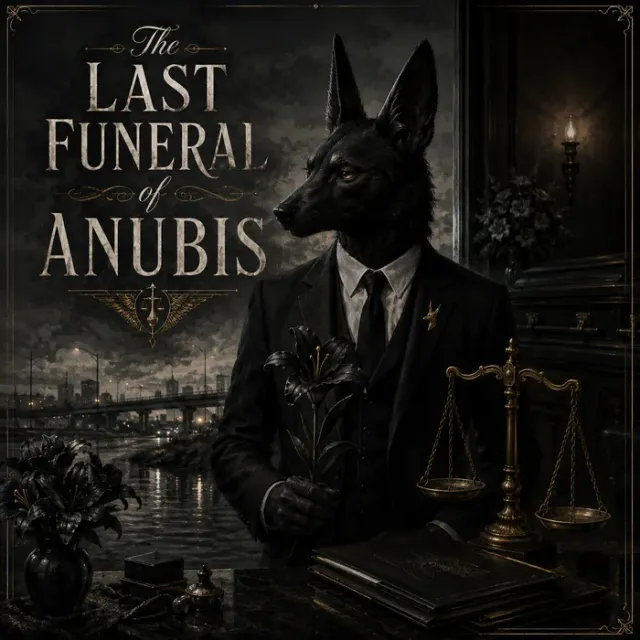
The Last Funeral of Anubis
Dark cabaret, gothic folk, and chamber blues place Anubis in a modern funeral home shaped by bureaucracy and human grief.
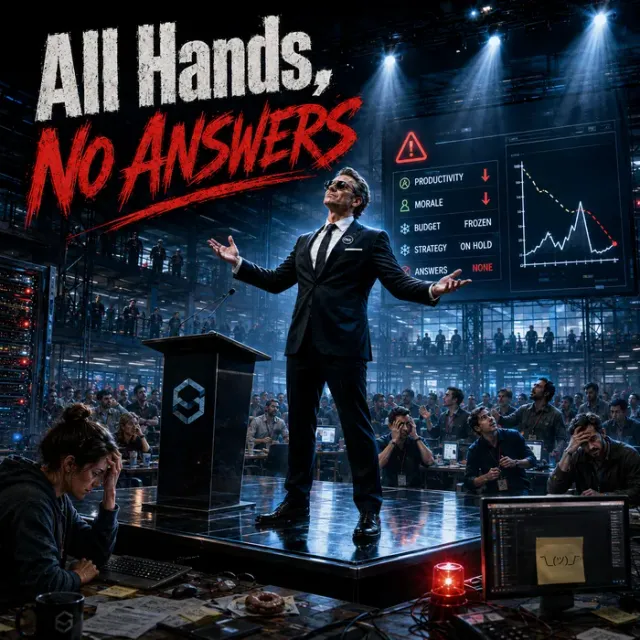
All Hands, No Answers
A theatrical comedy arena-metal rock opera about corporate spin, broken systems, filtered truth and a CEO discovering the crisis beneath the stage lights now.
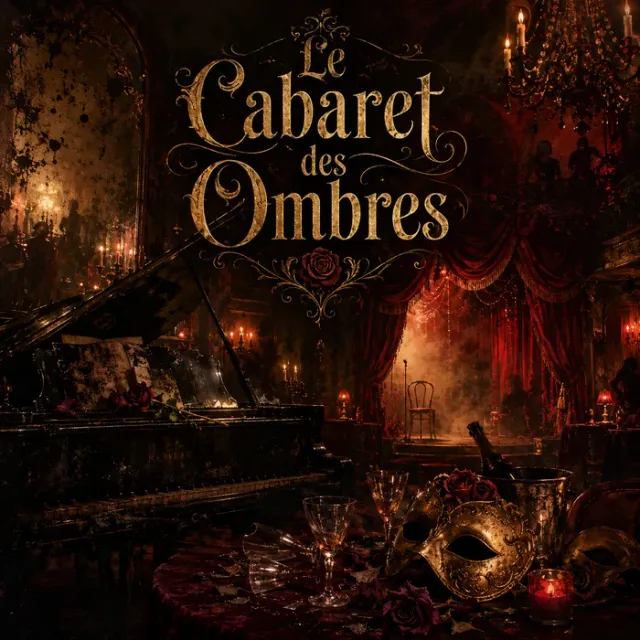
Le Cabaret des Ombres
A dark cabaret concept album of velvet, secrets and lost souls, where Parisian glamour turns into gothic theatre, betrayal and haunting chansons.

Make the Button More Visible


Download the complete album
Get the full ZIP package with tagged audio files, cover artwork, and album metadata.
Help keep the albums coming
If this album was useful or fun to listen to, a small contribution helps cover hosting, tools, and new music experiments.