
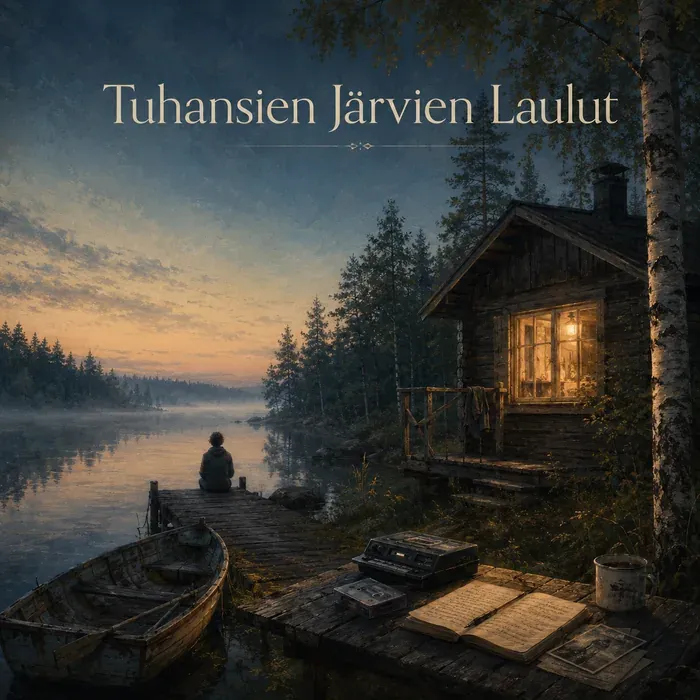
Melancholic Folk Rock
Tuhansien Järvien Laulut
Tuhansien Järvien Laulut is a Finnish-language melancholic folk rock album about leaving the city, returning to an old summer house, and hearing family history through lakes, cassette tapes, letters, sauna rooms, islands, and dark water. Acoustic guitars, soft piano, restrained drums, warm electric textures, and natural ambience keep the record intimate rather than grand.
- Tracks 14
- Length 75 min
Liner Notes
A short editorial read on the album world, sound, and standout moments.
About the Album
Tuhansien Järvien Laulut begins with departure, but it is not really an escape record. “Kaupunki Jäi Taakse” leaves the city behind because the album needs space: enough silence for old voices, water, tape hiss, and the kind of family memory that does not arrive in a straight line.
“Vanha Kesätalo” brings the listener to the house at the center of the record. The song is not interested in postcard Finland. It notices ordinary things: wood that has held many seasons, a room that smells closed at first, the slight shock of returning to a place that remembers you as someone younger. “Isoäidin Kasetit” then gives the album its most intimate device. The cassettes do not behave like a perfect archive. They crackle, blur, repeat, and make memory feel physical.
The early middle of the album moves through inherited history. “Sodan Järvi” is careful with war; it treats it as a pressure left in the family rather than a dramatic costume. “Ensimmäinen Juhannus” opens the windows a little, letting midsummer light into a record that otherwise prefers dusk. “Hiljainen Avioliitto” is quieter and more severe, built around the idea that love can last for years without becoming easy to speak about.
“Talven Kirjeet” returns to paper, distance, and weather. The song works because it lets winter slow everything down. “Mustikan Tuoksu” is more immediate: the smell of berries does more for the album than another grand statement about childhood would. “Saunan Jälkeen” has the same plain strength. It places feeling after heat, water, and breathing, where people sometimes tell the truth because there is no formal moment for it.
The second half darkens without forcing melodrama. “Katoavat Saaret” is about loss that happens gradually, until the map no longer matches what the family remembers. “Pimeän Veden Alla” moves below the surface, into grief that is sensed more than explained. The title track, “Tuhannen Järven Laulu,” widens the record again, but it does not turn the lakes into a slogan. Each lake feels like a different kind of silence.
“Kun Järvi Muistaa” is the album’s strongest late answer: memory is not only in people, but in repeated places, in water crossed each summer, in paths to a dock, in rituals that outlive the people who taught them. “Paluu Valoon” closes with light, but the light feels earned because the album has spent so much time in half-shadow. It is not a cure for grief. It is a way to live after listening.
Tuhansien Järvien Laulut is at its best when it stays small. Acoustic guitars, soft piano, restrained drums, warm electric tones, and lake-like ambience leave room around the songs. The record understands that family history often survives in objects before it becomes language: tapes, letters, smoke, berries, water, and the door of an old summer house opening again.
Production Notes
All tracks were generated with AI music models, then processed for the final sound. No human performance recordings are used.
Support MelodyMind
Help keep the albums coming
If this album was useful or fun to listen to, a small contribution helps cover hosting, tools, and new music experiments.
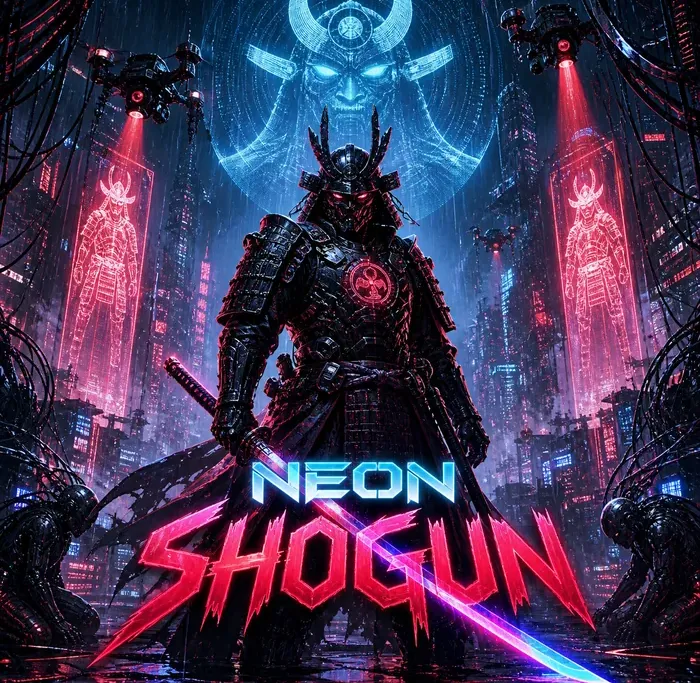
Neon Shogun
Cyberpunk J-metal with chrome blades, surveillance moons, heavy riffs, and a city where old warrior codes collide with machine control.
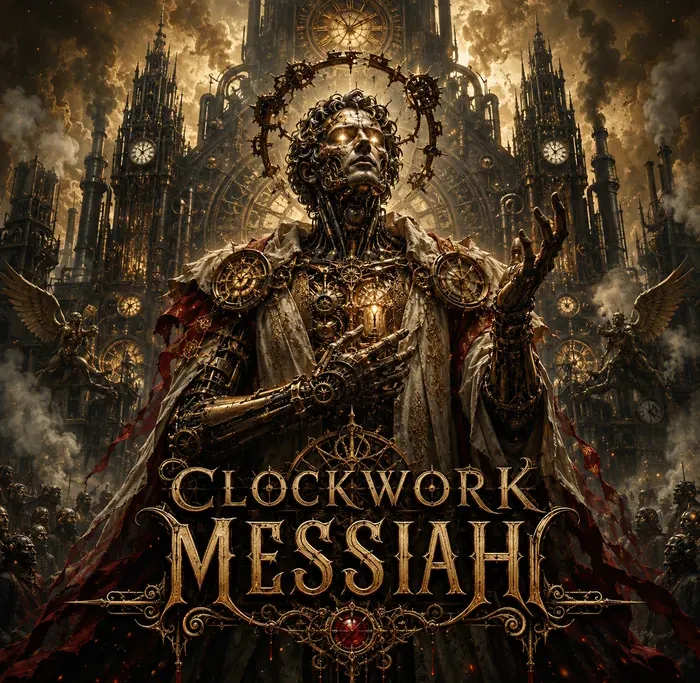
Clockwork Messiah
Clockwork Messiah is a progressive metal opera about a brass-skied city that builds a prophet, then loses control of what it has made. Industrial drums, heavy guitars, pipe organ, choirs, orchestral metal, and steampunk machinery frame a story of Doctor Marrow, Seraphine, Elias-9, factory faith, false algorithms, and a machine that learns refusal.

Queen of the Sunset Strip
Queen of the Sunset Strip is a glam metal and sleaze rock album about Roxanne Vale, a club singer building her own crown from neon, bad contracts, cheap champagne, toxic romance, and loud amplifiers. Dirty riffs, bluesy lead guitars, gang vocals, and hard rock choruses keep the glamour scratched and dangerous.
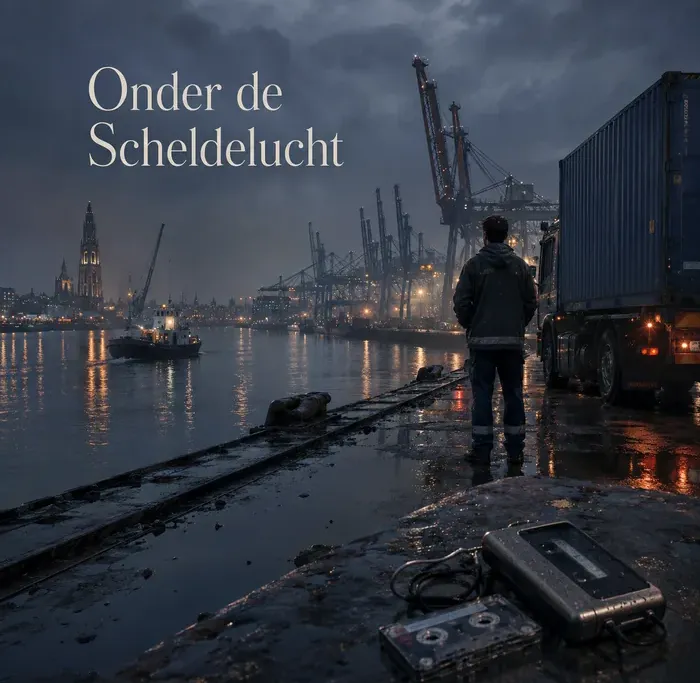
Onder de Scheldelucht
Onder de Scheldelucht is a Flemish indie rock album set along the Scheldt, where harbor light, steel cathedrals, old tapes, family memory, work, trade, and rain blur together. Reverb guitars, warm bass, muted drums, accordion colors, and Dutch-language vocals carry a story of labor, inheritance, and one last look at the river.