
Pagan Folk Metal
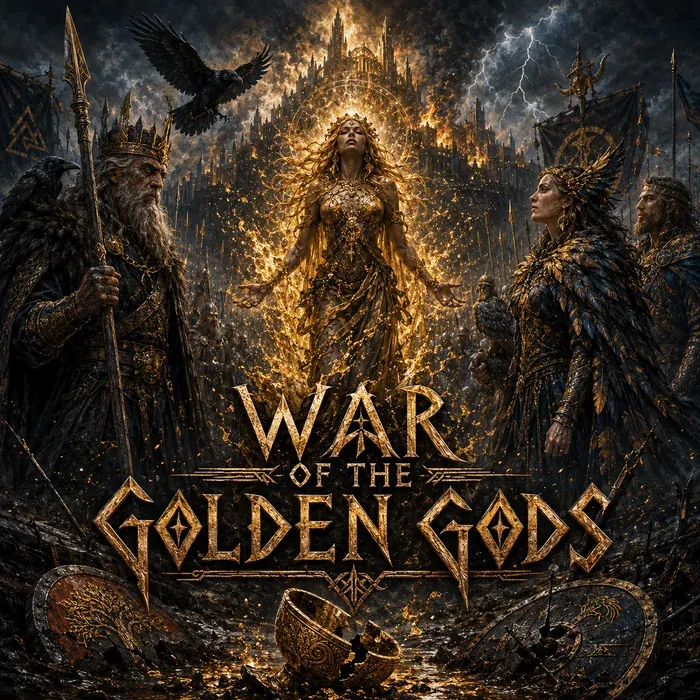
War of the Golden Gods
War of the Golden Gods turns Norse myth into fierce Viking metal - gold, war, magic and uneasy peace in a gripping mythic concept album of power and ruin.
Liner Notes
A short editorial read on the album world, sound, and standout moments.
About the Album
War of the Golden Gods is the kind of concept album that does not treat mythology as decoration. It enters the old Norse world at the moment when divine order begins to rot from the inside: not through a monster at the gates, but through gold on the table, suspicion in the hall and a new kind of power that the proudest gods do not yet know how to name. Across fourteen tracks, Melody Mind Music turns the war between the Aesir and the Vanir into a fierce, dramatic Viking metal narrative about greed, magic, statecraft and the cost of peace.
The album opens with Gullveig arriving in Asgard like a spark dropped into dry timber. She is not written as a simple villain, and that is one of the project’s strongest choices. She is temptation, victim, catalyst and mirror at once. When the Aesir try to burn her three times, the act does not solve the problem; it exposes it. The flames only make the gold brighter. From there, the record grows into a full political myth: Odin defending rule through spear and law, Freyja guarding the dangerous dignity of Seiðr, Njörd hearing the dead beneath the noise of victory, and Freyr standing between harvest and battle.
Musically, War of the Golden Gods has the right bones for its subject. The core is folk-influenced Viking metal: heavy guitars, tom-driven war drums, ritual pulse, hardanger-fiddle colors, rough male vocals, answering female lines and choruses that feel built for firelight rather than stadium polish. The record works best when it sounds physical: mud under boots, shields cracking, horns cutting through rain, a cup passed between hands that do not trust each other. This is not glossy fantasy metal with vague thunder in the background. The strongest moments feel carved, smoky and close to the ground.
Several tracks also stand out as individual listening points. Three Times Burned has the immediate force of a live-set favorite, built around a resurrection hook that is easy to remember without becoming cheap. Njörd’s Salt Lament slows the album down at exactly the right moment, giving the war a father’s voice instead of another sword. Falcon Cloak Before Dawn brings speed and movement, while The Bitter Peace Cup turns a ritual object into one of the album’s most uncomfortable emotional centers. These changes keep the record from becoming one long battle scene.
What makes the album especially rewarding is its sense of motion. The first half pushes forward like a war chronicle: the stranger at the gate, the corrupting question of gold, the discovery of Vanir magic, the failed execution, the spear thrown into history. By the midpoint, Mud on the Walls of Asgard becomes the album’s brutal center: not a clean victory scene, but a collapse of certainty. The siege shows both sides trapped in their own pride, and the image of sacred walls stained with mud gives the album one of its most memorable symbols.
The second half is where the record becomes more interesting than a simple battle album. Broken Shields for Peace, The Bitter Peace Cup and Hostages of Heaven shift the focus from combat to consequence. The gods may stop fighting, but the peace is not pure. It is negotiated through grief, leverage and ritual humiliation. That gives the album a sharp political edge: it understands that treaties can end violence without healing the reasons it began. The repeated images of broken shields, shared cups, ash and gold become more than mythic props; they become a language for compromised power.
Odin’s arc gives the final stretch real weight. In Odin Learns the Hidden Thread, the Allfather does not merely win knowledge; he absorbs something he once despised. His movement from open force toward secrecy, control and magical intelligence makes the album feel surprisingly modern. Rule, the record suggests, is not only about strength. It is about who controls the story, who owns the tools of fear, and who can turn shame into policy. That idea gives the album its darker aftertaste.
The title track, War of the Golden Gods, brings the conflict to a large but not simplistic finale. It has the scale a concept album needs, yet it avoids the easy triumph of one side crushing the other. Instead, the gods are changed. The war ends because continuing would destroy the meaning of victory itself. The epilogue, Ash in the Shared Cup, then closes the album with a quieter, stronger image: peace as a vessel that still carries residue. The cup can be raised, but it cannot be made innocent.
Recommended if you like: Political punk, post-punk, protest rock, anti-authoritarian lyrics, dystopian concept albums, AI-assisted music projects. Even though the sound here is rooted in Viking metal rather than punk, the spirit is closer to protest music than escapist fantasy. It is about rulers, bargains, public violence, private fear and the stories nations tell to make their wounds look noble.
War of the Golden Gods is recommendable because it has more than volume and mythic scenery. It has a point of view. It gives the listener riffs, drums and ritual force, but also a coherent dramatic argument: every empire, even a divine one, has a price hidden beneath its gold. For listeners who want heavy music with narrative depth, strong imagery and a sense of consequence, this album is worth entering from the first gate to the final cup.
Production Notes
All tracks were generated with AI music models, then processed for the final orchestral sound. No human performance recordings are used.
Full album download
Download the complete album
Get the full ZIP package with tagged audio files, cover artwork, and album metadata.
Support MelodyMind
Help keep the albums coming
If this album was useful or fun to listen to, a small contribution helps cover hosting, tools, and new music experiments.
Join the conversation
Reactions from the web
Mentions, likes, reposts, and replies from IndieWeb and Fediverse-friendly sites can appear here after you allow community features.
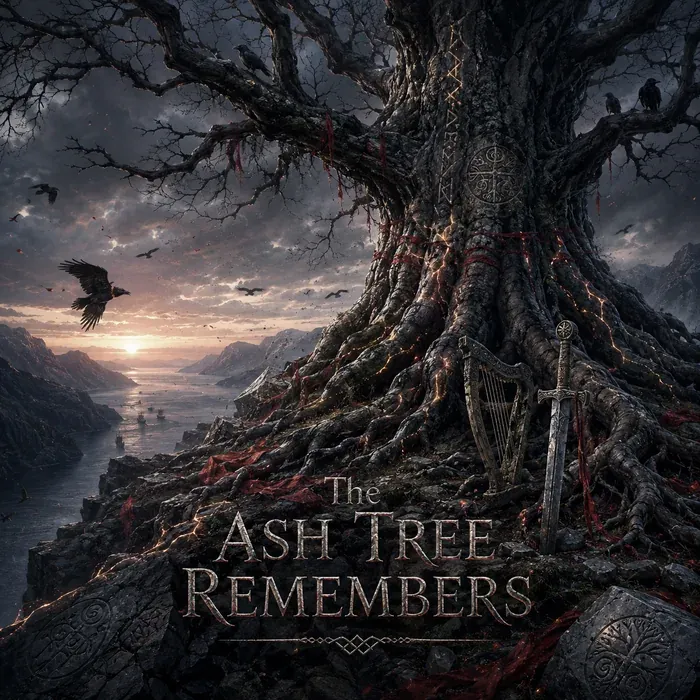
The Ash Tree Remembers
The Ash Tree Remembers is an epic Viking metal journey through Yggdrasil, war, memory, death and renewal, told through crushing riffs and Nordic ritual fires.
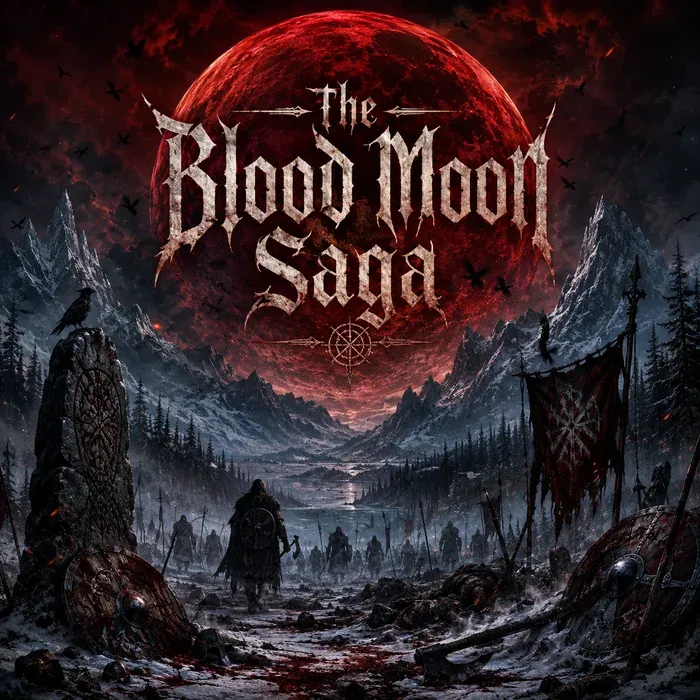
The Blood Moon Saga
The Blood Moon Saga is a dark Viking metal concept album of blood feud, prophecy, ritual war, tragic revelation, and apocalyptic Nordic atmosphere.
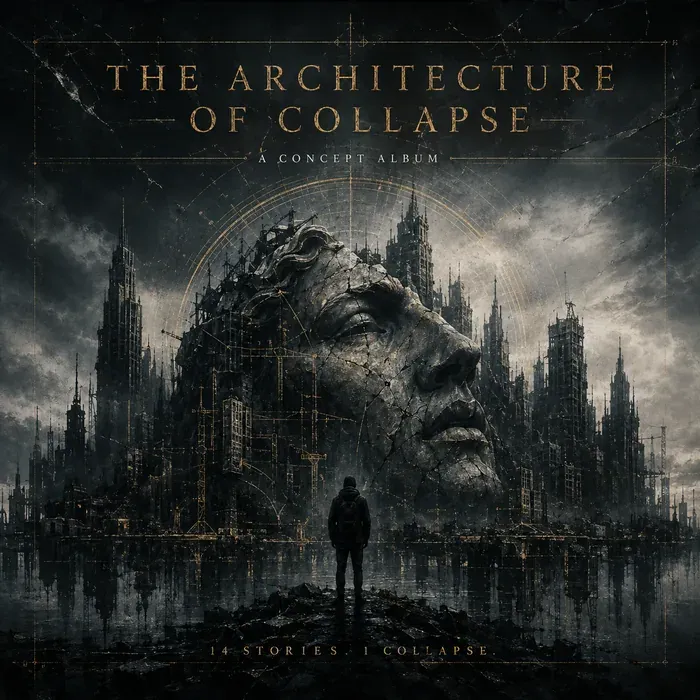
The Architecture of Collapse
The Architecture of Collapse is a dark symphonic metal opera about broken systems, burnout, rage, and one developer losing himself inside the machine at work.
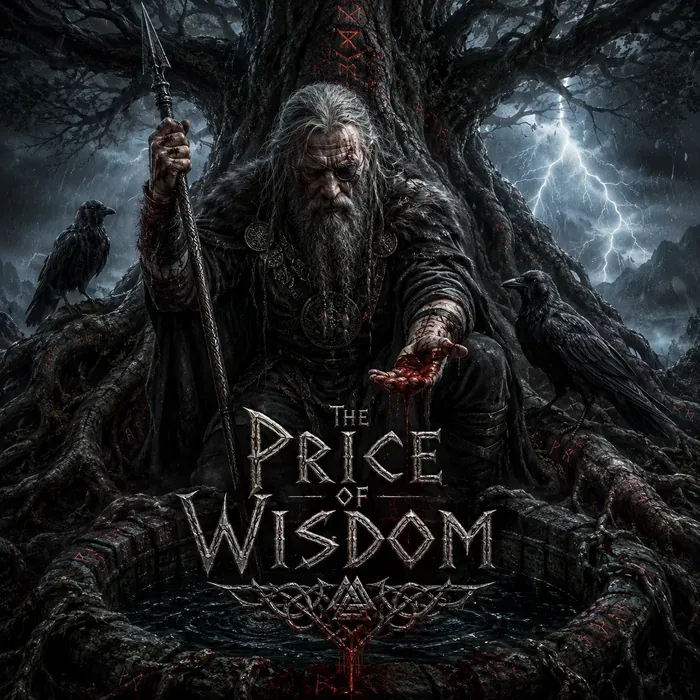
The Price of Wisdom
A dark progressive Viking metal journey through Odin’s hunger for wisdom, sacrifice, prophecy, runes, and the brutal cost of knowing too much under Yggdrasil.
Community
Comments...
Read or leave a comment about this album. Comments are provided by Cusdis and load only after you allow the comments feature.
Enable comments to load the discussion from Cusdis.