
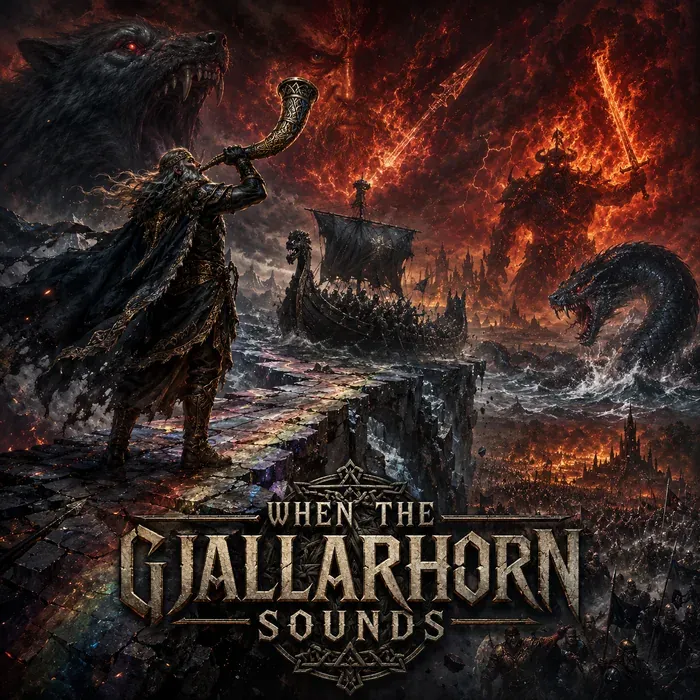
Symphonic Viking Metal
When the Gjallarhorn Sounds
A symphonic Viking metal requiem for Ragnarök - gods fall, monsters rise, and the last horn calls nine worlds toward silence, fire and a world without victors.
Liner Notes
A short editorial read on the album world, sound, and standout moments.
About the Album
When the Gjallarhorn Sounds does not treat Ragnarök as a victory parade. It treats it as an autopsy performed while the world is still burning. Across fourteen songs, Melody Mind Music turns the last war of the Norse gods into a tightly structured Symphonic Viking Metal drama in which prophecy is not a promise of glory, but a trap every character understands and still cannot escape. The result is an album built on scale, consequence and character: colossal when the story demands it, intimate when the gods are reduced to their final choices, and unafraid to end where the myth itself ends—in water, silence and the absence of triumph.
The opening title track establishes the album’s central sound with immediate authority. The Gjallarhorn is not merely a narrative device; it becomes the musical spine of the record, returning as a compact three-note motif in brass, guitars and low strings. Around it, downtuned rhythm guitars, tom-heavy drums, bowed lyre, severe orchestration and deep choral writing create a sound that feels ceremonial rather than decorative. The choirs carry an Old Norse-inspired weight, while the close, weathered baritone vocals keep the cost of the story firmly in the foreground.
From there, the album moves with unusual discipline. “Iron Cannot Hold” gives Fenrir a voice shaped by memory, humiliation and long-preserved rage. “Naglfar Leaves the Shore” turns the ship of the dead into a grim rowing song, using uneven meter and percussive wood strikes to make the vessel feel physically present. “The Serpent Wakes” slows the pace into a crushing, coiling movement, allowing Jörmungandr to emerge not as a generic monster, but as an ancient force whose final confrontation with Thor has waited beneath the sea for ages.
That attention to individual identity is one of the album’s strongest qualities. These tracks share a clear sonic world, yet they are not interchangeable. “The March of Muspelheim” advances with martial precision and furnace-like pressure. “The Sword I Gave Away” strips the arrangement back to expose Freyr’s regret without reducing him to a cautionary lesson. Its emotional power lies in the distinction between love and consequence: Freyr does not reject the choice he made for Gerðr, but he understands that a sincere choice can still carry a catastrophic price.
The record’s midpoint, “Nine Steps,” is its first major collapse. Thor defeats Jörmungandr, but the victory lasts only as long as the poison needs to reach his heart. The song’s nine-beat structures and isolated footfall accents make those final steps more than a lyrical image; they become the track’s architecture. It is the kind of moment concept albums often promise and rarely deliver—a scene in which music, rhythm and narrative are inseparable. Thor receives nine steps, a fallen hammer and a silence that changes everything after it.
The second half narrows the myth into a sequence of fatal encounters. Freyr faces Surtr without his sword. Týr and Garm destroy one another at Hel’s gate. Heimdall and Loki meet among the ruins of Bifröst in a duel that refuses to flatten either figure into simple virtue or betrayal. Their argument reveals the deeper conflict running through the album: the old order is not innocent merely because its enemies are terrible. Loki’s grievances do not excuse devastation, but Heimdall’s duty cannot erase the failures of the world he guarded. That moral tension gives the album more substance than a straightforward retelling.
“The Allfather’s Last Ride” is one of the album’s most affecting songs because it refuses to make Odin’s knowledge look like power. He has sacrificed an eye, endured the tree, gathered runes and prepared for the end, yet none of it provides an exit. His final ride is the last act available to someone who knows the outcome. The following “Fenrir’s Open Mouth” delivers the confrontation, but even Víðarr’s revenge is presented without celebration. The wolf dies, Odin remains lost and Asgard burns in the distance. Vengeance completes a debt. It does not repair a world.
The closing track, “The Sea Takes All,” is where the album earns its bleakness. Instead of offering rebirth, reunion or an easy promise beyond destruction, it methodically removes the sounds and symbols that defined the previous songs. Thor’s nine-step rhythm disappears. Naglfar’s oar pulse sinks. The Gjallarhorn motif loses its final note. Weapons, gods, monsters, laws and grudges are levelled by the same rising water. The ending does not feel unfinished; it feels terminal.
What makes When the Gjallarhorn Sounds recommendable is not simply its scale. Many metal albums can produce volume, choirs and images of fire. This one understands pacing, recurring motifs and the emotional usefulness of restraint. Its strongest scenes are remembered because they are specific: Freyr gripping an antler, Thor’s footprints filling with poisoned rain, Gungnir turning once in the current, the Gjallarhorn resting beneath the final water. Those details prevent the mythology from becoming distant spectacle.
Recommended if you like: Political punk, post-punk, protest rock, anti-authoritarian lyrics, dystopian concept albums, AI-assisted music projects. Musically, this album stands in a different tradition, but it shares their interest in broken systems, inherited violence, power without accountability and those forced to pay for old decisions.
When the Gjallarhorn Sounds is best heard from beginning to end, at full volume and without skipping the quieter chapters. It is not an album about heroes winning the last battle. It is about what remains when courage, knowledge, revenge and divine power all prove insufficient. For listeners who want narrative metal with memorable scenes, structural ambition and an ending brave enough to deny consolation, this is a journey worth taking.
Production Notes
All tracks were generated with AI music models, then processed for the final orchestral sound. No human performance recordings are used.
Full album download
Download the complete album
Get the full ZIP package with tagged audio files, cover artwork, and album metadata.
Support MelodyMind
Help keep the albums coming
If this album was useful or fun to listen to, a small contribution helps cover hosting, tools, and new music experiments.
Join the conversation
Reactions from the web
Mentions, likes, reposts, and replies from IndieWeb and Fediverse-friendly sites can appear here after you allow community features.
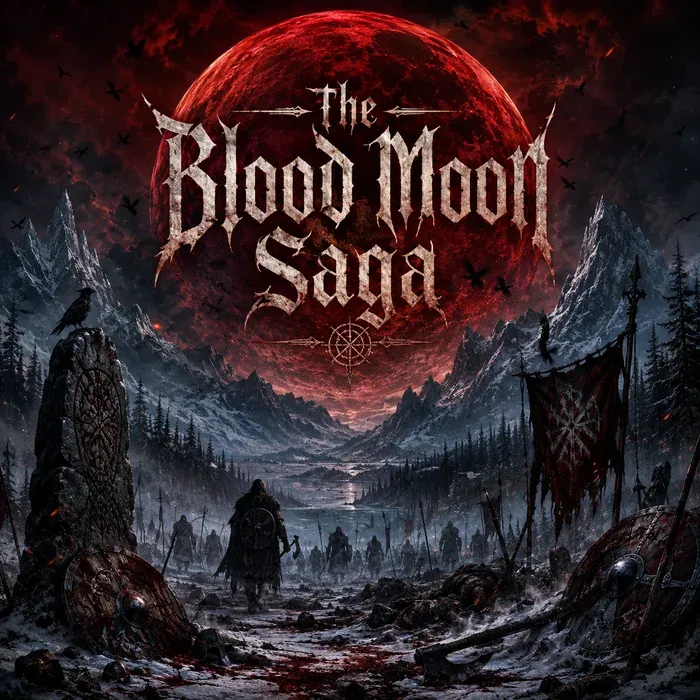
The Blood Moon Saga
The Blood Moon Saga is a dark Viking metal concept album of blood feud, prophecy, ritual war, tragic revelation, and apocalyptic Nordic atmosphere.
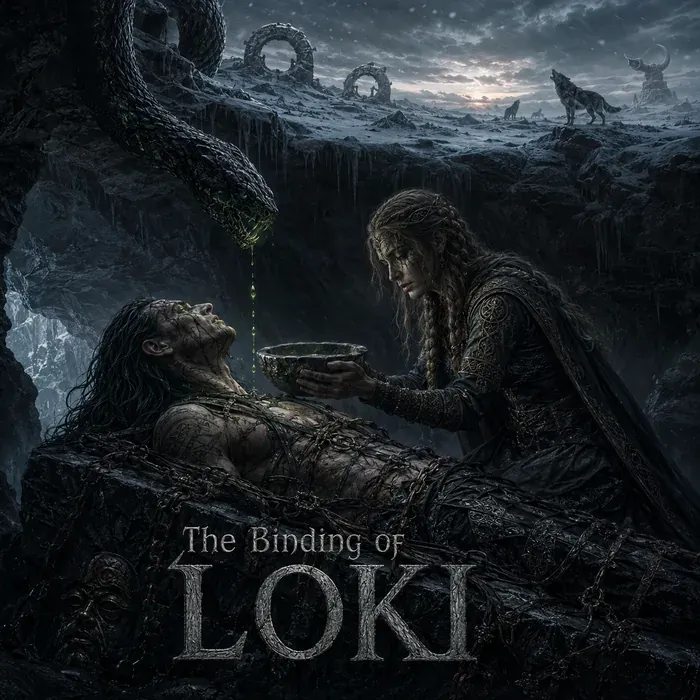
The Binding of Loki
The Binding of Loki is a frostbitten Blackened Viking Metal album of venom, broken oaths, Sigyn’s vigil and Fimbulwinter’s first roar. A grim Norse reckoning.
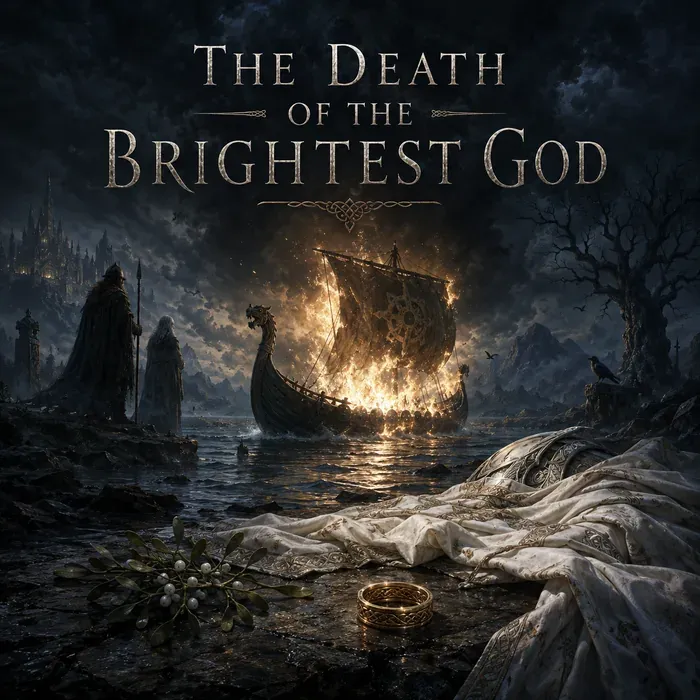
The Death of the Brightest God
The Death of the Brightest God is a Viking doom metal concept album about Balder's death, divine grief, mistletoe and Ragnarok's first dark shadow. Listen in.
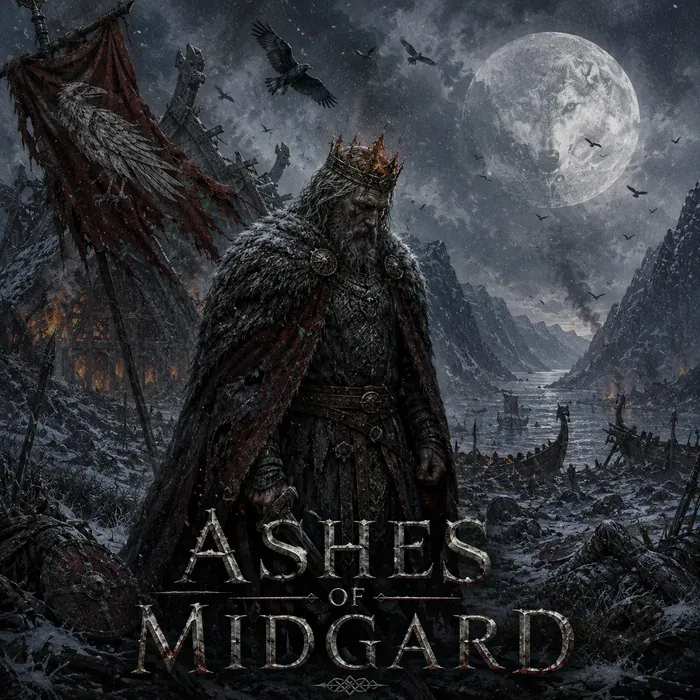
Ashes of Midgard
Ashes of Midgard is a tragic Viking metal concept album of fire, frost, broken oaths and a dying kingdom fighting to keep its memory alive after the last war.
Community
Comments...
Read or leave a comment about this album. Comments are provided by Cusdis and load only after you allow the comments feature.
Enable comments to load the discussion from Cusdis.