


German rap connects rent, bureaucracy, inequality, and resistance through characters living between government files and Berlin streets.
Tracklist
Liner Notes
A short editorial read on the album world, sound, and standout moments.
About the Album
Zwischen Akten und Asphalt is a 14-track German rap concept album about the moment politics stops being an argument on television and becomes a letter on the kitchen table. Set largely in a rain-darkened Berlin, the record follows an unnamed observer through apartment viewings, delayed trains, hospital corridors, administrative offices, construction zones and late-night streets. Every chapter turns a public issue into a human scene. Rising rents become a crowded stairwell. Digital stagnation becomes a frozen computer screen. Energy policy becomes an elderly woman lowering the heat. Infrastructure failure becomes a father missing dinner with his daughter.
That focus on lived detail gives the album its weight. It does not treat Germany as a collection of headlines, nor does it reduce complex questions to easy slogans. Instead, it listens to the people who usually appear only as examples in political speeches: a full-time worker who still cannot afford a home, a nurse carrying an understaffed night shift, a civil servant trapped inside an outdated system, a migrant family turned into a talking point, a delivery rider working beneath the windows of government buildings, and younger people wondering whether effort will ever lead to stability. Their stories remain distinct, but the album gradually reveals how closely they are connected.
Musically, Zwischen Akten und Asphalt stays rooted in dark, conscious German rap. Restrained 808s, dry drums, cold piano figures, muted bass and industrial percussion create a sound that feels urban without slipping into familiar street-rap posturing. Printer clicks, railway rhythms, stamp-like hits and hard pauses are used as structural elements rather than decorative effects. The production is deliberately controlled: tense when the lyrics need pressure, sparse when a voice needs room, and heavier only when the story earns it. The result is less a playlist of protest songs than a single long night moving through different rooms of the same country.
The opening track, “Berlin brennt leise,” establishes that world with red traffic lights reflected on wet asphalt and the government district glowing in the distance. “Miete frisst Träume” moves into the housing crisis through a packed apartment viewing and an older tenant facing displacement. “Brücken aus Versprechen” turns rail delays and failing infrastructure into a study of lost time and damaged trust, while “Pflegenotstand” narrows the focus to a nurse whose compassion is measured against an impossible schedule.
From there, the record becomes more confrontational. “Grenze im Kopf” examines the distance between migration rhetoric and actual neighbors. “Stromrechnung und Schlagzeilen” contrasts televised certainty with private anxiety in a cold kitchen. “Digitales Niemandsland” captures the absurdity of a state that speaks about modernization while citizens and employees remain trapped between broken portals and paper forms. At the album’s midpoint, “Aktenzeichen Zukunft” pulls these separate lives into the same administrative room. It is the record’s decisive turn: the narrator realizes that housing, care, mobility, energy costs and bureaucracy are not isolated failures, but overlapping pressures carried by the same people.
The second half widens the frame without losing that intimacy. “Zwei Klassen, eine Stadt” walks a single street where luxury apartments face a food bank. “Filterblasenland” confronts the way social media strips context from real suffering and converts it into ammunition. “Alte Republik, junge Wut” gives younger workers, students and researchers their own language for insecurity, while “Zu viel Monat, zu wenig Zukunft” finds the album at its most reflective: a kitchen table, a stack of testimonies and the difficult decision to move from observation to public speech.
The title track brings the characters together outside the illuminated government district. Crucially, it avoids the fantasy of instant change. No door opens wide, no politician solves the crisis in a final verse, and no triumphant chorus pretends that being heard is the same as being helped. What changes is visibility. People who were treated as cases, costs, delays or statistics speak in their own words. The closing song, “Die Zukunft zieht eine Nummer,” returns to the waiting room the next morning. The systems remain slow, but the people inside them are no longer entirely separated.
That refusal of easy resolution is one of the album’s defining qualities. Zwischen Akten und Asphalt is angry, but its anger is specific. It is political without becoming a party leaflet, compassionate without turning its characters into symbols, and cinematic without losing the hard surfaces of ordinary life. The recurring images of keys, files, warning lights, scaffolding and waiting numbers gain meaning as the story progresses. By the end, a file is no longer just a sign of bureaucracy; it is a record of someone refusing to disappear inside it.
Production Notes
All tracks were generated with AI music models, then processed for the final sound. No human performance recordings are used.
Full album download
Download the complete album
Get the full ZIP package with tagged audio files, cover artwork, and album metadata.
Support MelodyMind
Help keep the albums coming
If this album was useful or fun to listen to, a small contribution helps cover hosting, tools, and new music experiments.
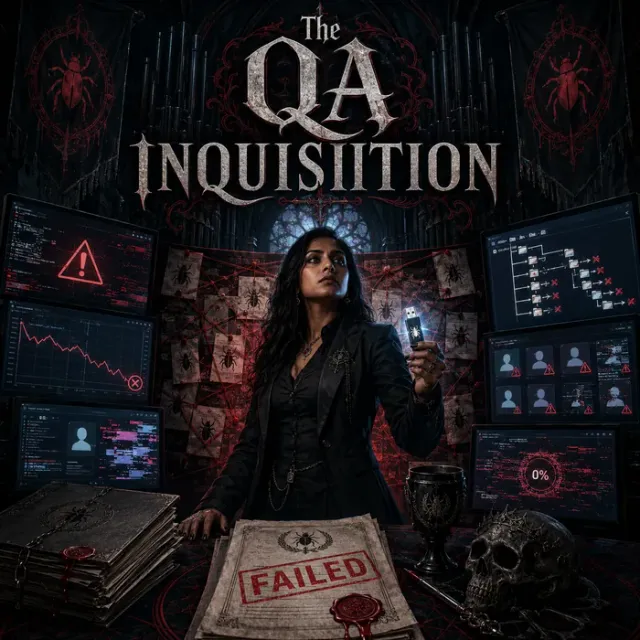
The QA Inquisition
The QA Inquisition is a gothic metal concept album about buried bugs, corporate denial and the high cost of ignoring warnings before a major software release.
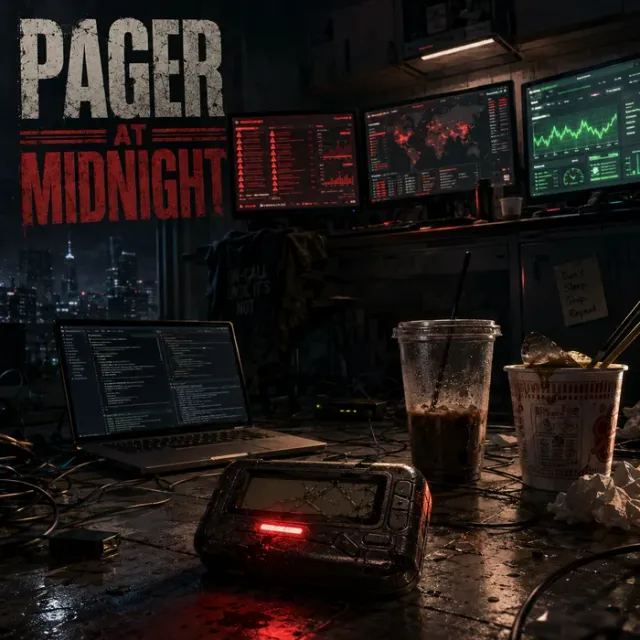
Pager at Midnight
Industrial metal turns an overnight production incident into a story about on-call exhaustion, brittle systems, and the people behind the alert.
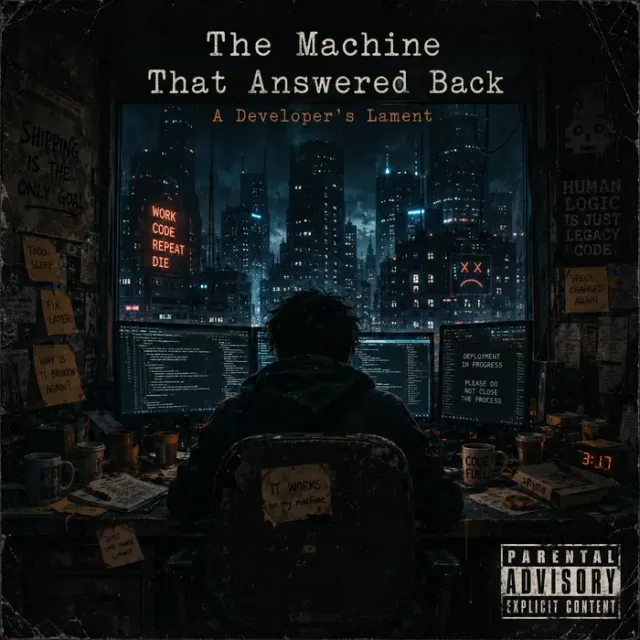
The Machine That Answered Back
A dark progressive symphonic metal opera about burnout, AI, authorship and survival, where code, choir and collapsing deadlines become one human crisis story.
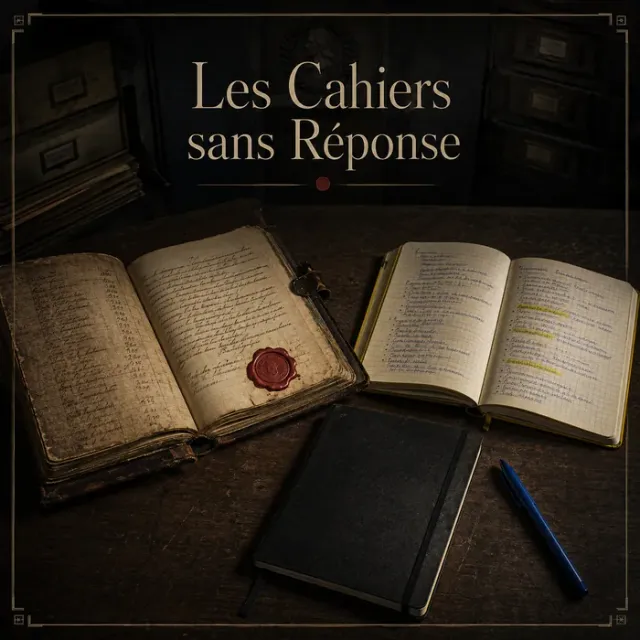
Les Cahiers sans Réponse
Les Cahiers sans Réponse turns centuries of unheard French grievances into tense art rock, post-punk and political chanson, asking whether anyone listens now.


